

Photo Credit: Getty Images
Noah Wyle has never hidden his deep connection to Hollywood. Raised just north of Hollywood Boulevard, his childhood was shaped by the culture and history of the entertainment industry. He remembers walking along the Walk of Fame, memorizing names and reading about the lives behind them. For him, those streets were more than landmarks. They were part of his upbringing. Movie theaters like the Egyptian and the Chinese were places he spent countless hours in, shaping his love for storytelling and performance.
That early fascination turned into a career almost by accident. As a high school student, Wyle auditioned for a play simply to get out of study hall. What started as a casual decision quickly became something more serious. Encouraged by positive feedback, he discovered not just a talent for acting but a genuine passion for it. That passion has now spanned nearly four decades.
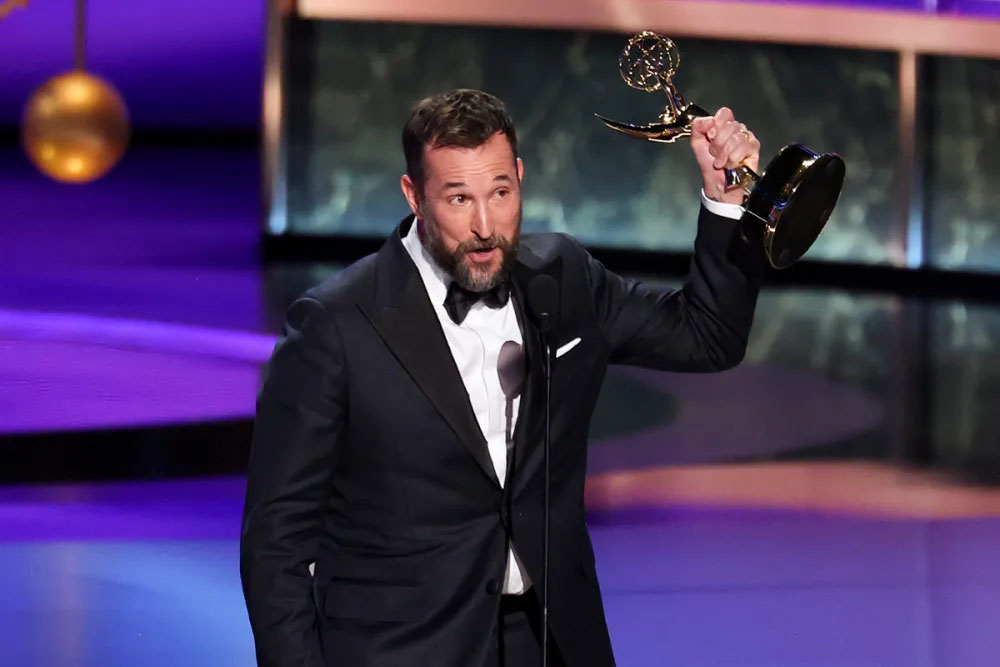
Wyle is now being honored with a star on the Hollywood Walk of Fame, a full circle moment for someone who once admired those same stars as a child. His career has been largely defined by television, with standout roles in shows like ER and his current work on The Pitt. His success on The Pitt includes both acting and executive producing, earning him major recognition.
Despite his dramatic reputation, Wyle brings humor and warmth to his work and relationships. His dynamic with co star Shawn Hatosy stands out as a key part of The Pitt’s appeal. Their long history in the industry creates a natural chemistry that translates into a playful and creative on screen partnership. Wyle describes it as a mix of familiarity and professional respect, which allows for improvisation and experimentation.
At the same time, Wyle remains thoughtful about the broader changes happening in Hollywood. Speaking about industry consolidation, including the involvement of companies like Warner Bros. And Paramount, he expresses concern for workers. From his perspective as a union member, fewer studios and platforms could mean fewer opportunities and less stability for those working behind the scenes. While such changes may benefit shareholders, he believes they do not serve labor in the same way.
Creatively, Wyle has also been involved in discussions around sensitive storytelling. In The Pitt, a storyline involving immigration enforcement raised concerns during production. Conversations with HBO led to adjustments in how the story was presented. Initially uncertain about the changes, Wyle later felt the final version was more balanced and effective, offering subtlety rather than direct confrontation.
Looking ahead to the next season of The Pitt, Wyle hints at smaller shifts rather than major changes. Instead of a large time jump, the focus may move toward seasonal differences and how they affect the types of stories being told. This reflects his broader approach to storytelling, finding depth and variation within continuity rather than constant reinvention.
Reflecting on his journey, Wyle sees his career as something both unexpected and deeply fulfilling. What he once thought would be limiting about television turned out to offer consistency, complexity, and a sense of family. His message to his younger self is simple but meaningful. Stay the course because the journey is worth it.