

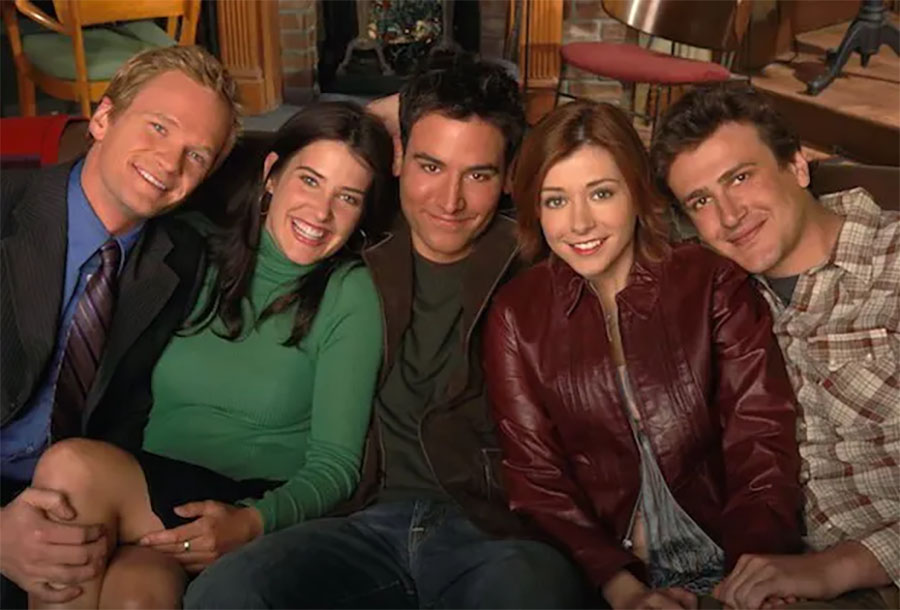
Photo Credit: Getty Images
Twenty years after How I Met Your Mother first premiered, the series remains one of television’s most talked-about sitcoms, dissected and debated in ways few comedies ever are. As the anniversary arrives, co-creator Craig Thomas reflects on the show’s unlikely beginnings, the careful and not-so-careful foreshadowing that carried through nine seasons, and the finale that left audiences divided. What becomes clear is that this show, though wrapped in quirky humor, was always built on memory, time, and connection.
When Thomas and Carter Bays first conceived the series, the year 2030 felt impossibly far away — a sci-fi landscape where an older Ted would tell his kids the story of how he met their mother. Neither writer had children at the time, yet they leaned on Bob Saget’s narration to embody that imagined older perspective. Now, with the year itself just five years away, both creators have children of their own and have stepped into Future Ted’s decade. The show’s concept was drawn from their lives — Thomas with his marriage, Bays with his single years — and the framing device of an older narrator gave them a way to separate the series from Friends clones. Still, the true beating heart was their friendships, heightened into television but grounded in reality.
From the start, the cast found ways to make the show feel lived in, insisting on laughing at each other’s jokes during scenes — a small but humanizing touch that sold their bond. That sense of authenticity fed into one of the series’ signatures: foreshadowing. Some of it was deliberate, like paying off Barney’s “rule” about marriage when Ted turned 30, or planting Tracy’s name in Season 1. Other connections emerged by chance, with Thomas admitting that sometimes the show seemed to take on a life of its own. Seeds were planted without knowing if they would ever grow, and yet across 208 episodes many of them did.
Of course, the ending remains the most scrutinized piece of HIMYM’s legacy. Thomas points to a deleted scene from the finale where Robin, meeting Ted for lunch after his marriage and children, admits to having regrets. The moment, cut for time, reinforced the depth of their connection, and Thomas now acknowledges some regret in leaving it behind. Years later, Robin’s cameo in How I Met Your Father was written to echo that lost exchange, a way of letting her voice what had once been unsaid.
Looking back, Thomas says he would revisit the pilot’s final moment at MacLaren’s, when the characters sat together at the end of that wild night. It symbolized everything the show would become — friendship, hope, and the possibility that this one small sitcom might go the distance. Two decades later, the fact that it still stirs passionate debate proves it did.