

Photo Credit; Getty Images
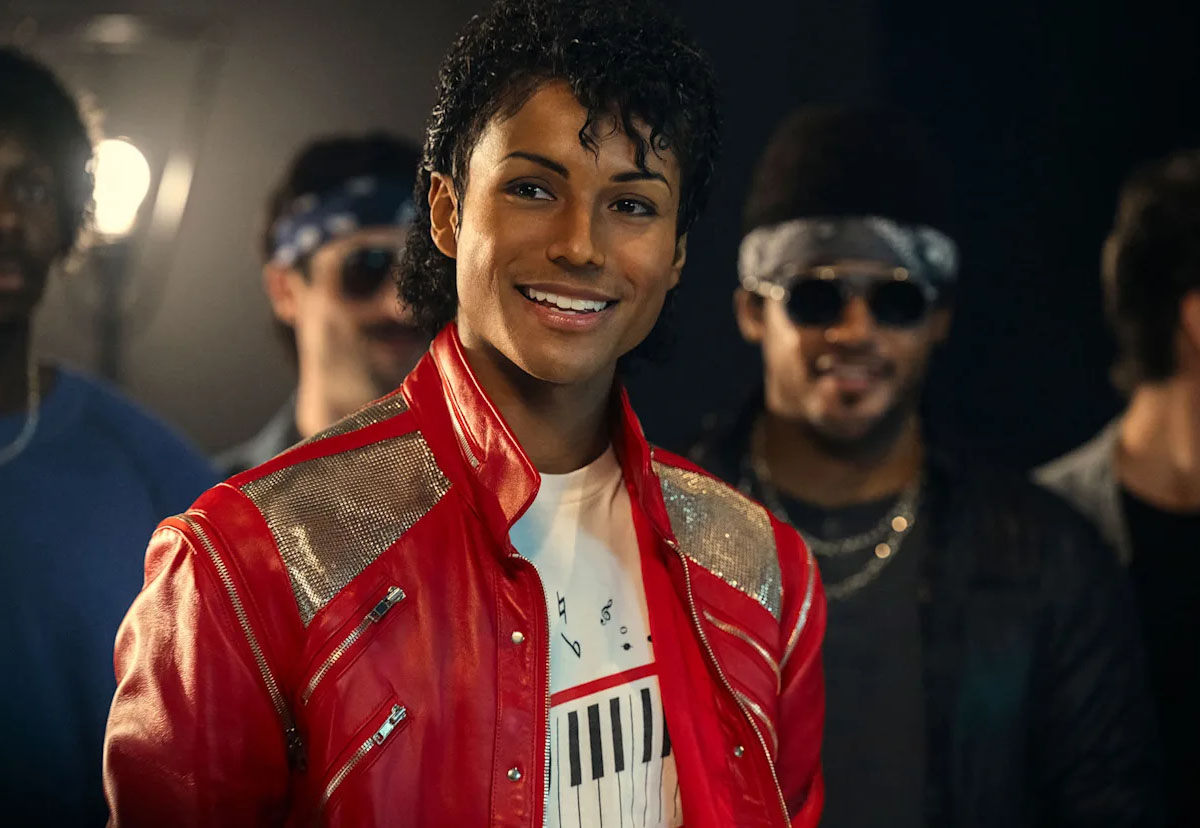
The new biographical film Michael takes a familiar approach to telling the story of one of the most iconic entertainers in history, but it succeeds where it matters most. It gives fans a chance to relive the magic. At the center of it all is Jaafar Jackson, who takes on the role of his legendary uncle with a performance that feels surprisingly authentic, even without singing a single note himself.
In many musical biopics, actors are expected to perform their own vocals, adding a layer of realism and risk. Films like Coal Miner’s Daughter, Rocketman, and Elvis followed that path with varying degrees of success. Michael chooses a different route. The film uses original recordings of Michael Jackson’s songs, from Billie Jean to Thriller, with Jaafar lip syncing. Instead of weakening the performance, this choice allows him to focus fully on embodying the physical presence and emotional tone of the King of Pop. The result is a portrayal that feels uncannily real, especially in the dance sequences where he truly shines.
The film is clearly designed as a crowd pleasing experience rather than a deep dive into controversy. Marketed as His Story Begins, it deliberately avoids the darker chapters of Jackson’s life. Early versions reportedly included more difficult material, but those elements have been removed. What remains is a polished and largely uplifting origin story that traces his rise from child star to global phenomenon. The ending even hints at a continuation, suggesting that a sequel could explore the more complicated aspects of his legacy.
Narratively, Michael follows a straightforward path. It starts with the Jackson 5 era, showing a young Michael’s talent emerging under the strict and often harsh guidance of his father Joe. Colman Domingo delivers a strong performance as the demanding patriarch, while Nia Long plays the quieter but steady presence of Katherine. The film captures the tension within the family and the pressure placed on a young performer who quickly became the centerpiece of a global act.
One of the film’s strengths lies in showing Michael’s ambition and creative instincts. Even as a child, he is portrayed as someone who studied great performers and understood what it would
take to stand apart. A standout moment involves his decision to hire music lawyer John Branca, symbolically breaking away from his father’s control. Another memorable sequence features a confrontation over getting his music videos played on MTV, highlighting both industry barriers and his determination to overcome them.
The movie touches on many well known moments from his life, including his collaborations, personal quirks, and public image. It recreates famous music videos and performances with careful attention to detail. However, this approach can feel a bit like a checklist. While it covers the highlights effectively, it does not offer much new insight into who Michael Jackson was beneath the surface.
Director Antoine Fuqua brings a polished visual style, supported by strong production design that captures several decades of music history. The choreography is a major highlight, faithfully recreating Jackson’s signature moves. In these moments, Jaafar Jackson fully convinces, delivering performances that are energetic, precise, and emotionally engaging.
Michael may not break new ground as a biopic, but it understands its audience. It is a celebration rather than an investigation. Fans will likely embrace it for the music, the nostalgia, and the chance to see a familiar legend brought back to life on the big screen.