

Photo Credit: Getty Images
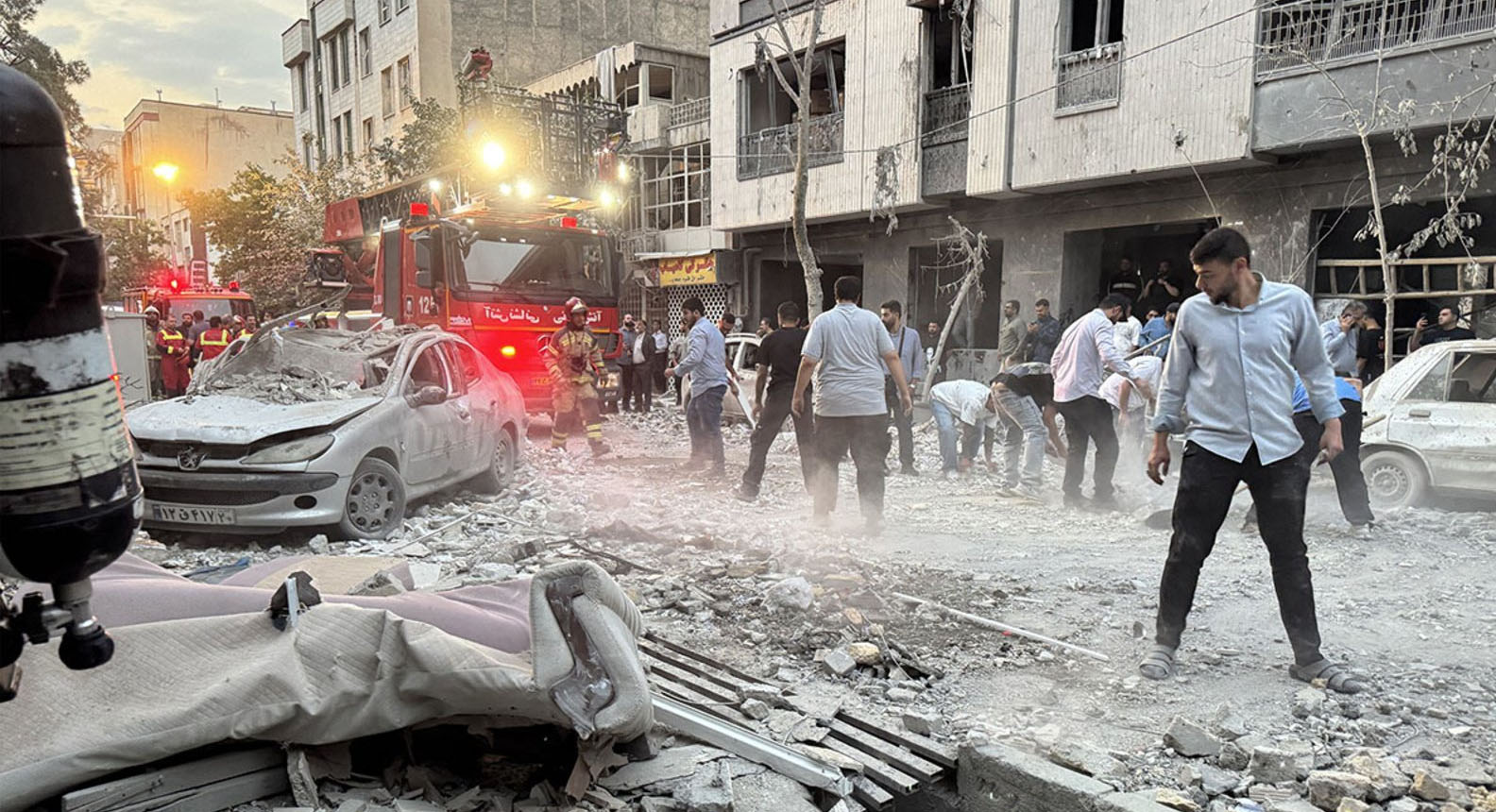
A dramatic escalation unfolded Thursday as Iranian missile strikes slammed into Israeli cities, directly hitting Soroka Medical Center in Beersheba and wounding at least 240 people. Among the injured were patients and staff—80 of them at the hospital alone—prompting Israel to respond with an aggressive strike on Iran's Khondab nuclear facility near Arak.
According to the Israeli military, the overnight attack on Khondab targeted a partially completed heavy water reactor. The site, long viewed by Israel as a critical component of Iran's nuclear ambitions, was hit in what Defense Minister Israel Katz called a "necessary act of deterrence." Standing amid the rubble of Soroka Medical Center, Prime Minister Benjamin Netanyahu warned, "Iran will bear the consequences of this in full."
The Israeli Defense Ministry pinned direct responsibility on Iran's Supreme Leader, Ayatollah Ali Khamenei. "This man absolutely should not continue to exist," Katz stated, signaling an unprecedented level of rhetoric. U.S. President Donald Trump, while declining to greenlight the assassination of Khamenei, reiterated that "there are no plans to kill him—at least not for now."
Thursday's Iranian barrage, launched before dawn, included ballistic missiles reportedly equipped with cluster munitions. These warheads fragmented on impact, inflicting widespread damage. Israel's Home Front Command confirmed that at least one such missile exploded near residential buildings in Ramat Gan, intensifying civilian panic.
Iran's Revolutionary Guard denied intentionally striking the hospital. It claimed the intended target was an Israeli military intelligence unit near the Gav-Yam Negev tech park, about two miles from Soroka. However, no independent evidence has supported this claim. An Israeli military official, requesting anonymity, admitted there was "no specific intelligence" suggesting the hospital was deliberately targeted.
Soroka Medical Center, a lifeline for nearly one million residents in Israel's south, had preemptively relocated hundreds of patients to underground wards—an emergency protocol developed after the 2023 Hamas attack. Still, infrastructure damage to surgical units and critical systems left the facility operating at limited capacity.
The broader conflict has seen Israel's airstrikes kill over 639 people in Iran, including 263 civilians, according to a Washington-based Iranian human rights organization. In retaliation, Iran has launched over 300 drones and missiles, killing 24 and wounding hundreds in Israel.
With talks of U.S. intervention circling and Tehran refusing to dismantle its nuclear program, the region stands on the brink. "Any U.S. involvement," Ayatollah Khamenei warned, "will bring irreparable damage." The rhetoric on both sides makes one truth clear: de-escalation remains dangerously elusive.