

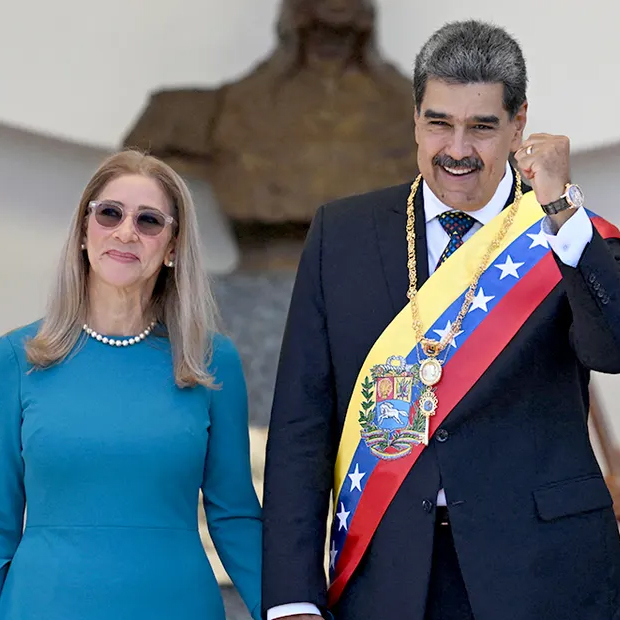
Photo Credit: Getty Images
Venezuela's former leader Nicolás Maduro and his wife, Cilia Flores, have pleaded not guilty to new charges of conspiracy to commit torture in a United States court, intensifying a legal battle that has drawn international attention to allegations of repression under Maduro's government.
The couple appeared in court on Thursday following the expansion of the US government's case against them. Both remain detained in Brooklyn after being captured during a US military raid in January and transported to New York to face prosecution.
Maduro rejected the new allegations, describing them as false accusations and testimony. Speaking in Spanish through a translator, he told the court that he rejected the indictment entirely. Judge Alvin Hellerstein subsequently entered a not guilty plea on his behalf.
Flores also denied the charges, declaring that she was completely innocent. Both appeared in beige prison uniforms, and reports indicated that they had lost weight during their detention.
The new indictment alleges that Maduro and Flores created and maintained a system of violent repression in Venezuela that resulted in thousands of people being killed, harassed or tortured. Prosecutors have described alleged methods including electric shocks, asphyxiation, sexual violence, forced nudity, prolonged isolation, starvation and psychological torture.
US authorities further allege that Maduro authorised torture against specific individuals and that American citizens were among those subjected to abuse under the alleged system.
The new charges add to an existing case in which prosecutors have accused Maduro, his wife, his son and alleged associates of participating in a cocaine trafficking conspiracy and collaborating with criminal organisations designated as terrorist groups by the United States.
Maduro has previously rejected the accusations, portraying them as part of an imperial strategy aimed at gaining influence over Venezuela and its substantial oil resources.
The defendants' lawyers are challenging the legality of the proceedings. They argue that Maduro, as the leader of a sovereign country, should be protected by sovereign immunity and maintain that his capture by US forces was unlawful. Both have sought to have the case dismissed on those grounds.
Flores has also unsuccessfully asked the court to release her on bond while awaiting trial, citing heart problems and other health concerns during her detention at the Metropolitan Detention Center in Brooklyn.
Their trial is scheduled for June 2027, meaning the legal proceedings could continue for months before the allegations are tested in court.
The expanded indictment adds another serious dimension to an already complex case involving allegations of drug trafficking, political violence and human rights abuses. Maduro and Flores deny the accusations, and the charges remain allegations that prosecutors must prove through the judicial process.