

Photo Credit; Getty Images
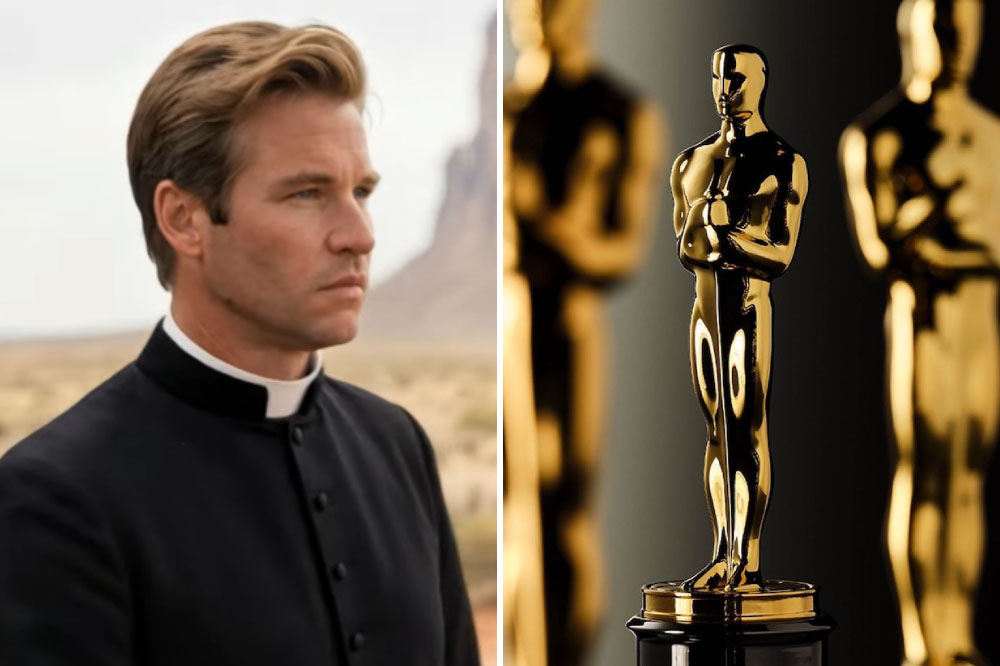
The film industry is entering unfamiliar territory as artificial intelligence begins to blur the line between human performance and digital creation. A striking example comes from the upcoming film As Deep as the Grave, where the likeness of Val Kilmer has been recreated using AI after his death in April 2025. This development is forcing major awards bodies to confront a question they were never designed to answer. Can an AI generated performance compete for the highest honors in film?
Kilmer had originally been cast as Father Fintan, a Catholic priest and Native American spiritualist. However, due to complications from throat cancer, he was unable to appear on set before his passing. Rather than recast the role, writer director Coerte Voorhees chose to reconstruct the performance using generative AI. With the cooperation of Kilmer’s estate and his daughter, Mercedes Kilmer, the role was assembled from archival footage and digital tools.
This decision has sparked a broader debate across the entertainment industry. Awards organizations such as the Academy of Motion Picture Arts and Sciences are still trying to define how AI fits into their criteria. Following controversy around The Brutalist, which used AI to enhance elements of Adrien Brody’s performance, the Academy stated that AI neither helps nor harms nomination chances. Instead, voters are encouraged to consider how much of the work is driven by human creativity. While this offers guidance, it stops short of establishing a clear rule.
Other organizations have taken firmer positions. SAG-AFTRA has ruled that performances fully generated by AI are not eligible for its awards, even if the actor’s estate has given consent. Similarly, the Recording Academy has emphasized that only human creators can receive recognition, though works with AI elements may still qualify if the human contribution is significant.
The issue is not entirely new. Earlier examples such as the digital recreations of Peter Cushing and Carrie Fisher in Rogue One raised similar concerns, though those cases involved characters the actors had previously portrayed. Even performances that relied heavily on technology, like Andy Serkis’s motion capture work in The Lord of the Rings: The Two Towers and the Planet of the Apes series, pushed awards bodies to rethink what qualifies as acting.
Still, the Kilmer case introduces a deeper level of discomfort. If audiences respond positively to his AI generated role, who deserves the credit? Is it a tribute to Kilmer’s legacy, or recognition of the technology and artists who reconstructed his performance? These questions extend beyond acting into other creative fields, as AI tools continue to reshape filmmaking.
Studios are not waiting for clear answers. Industry projections suggest that AI driven productions could soon make up a significant portion of film and television output. Meanwhile, organizations like the Golden Globes and Critics Choice Awards are expected to introduce their own guidelines as the technology becomes more common.
For now, there is no universal rule. The rise of AI performances is moving faster than the frameworks designed to evaluate them. As As Deep as the Grave approaches release, it may become a defining test case. Whether it is seen as a meaningful artistic achievement or simply another use of advanced technology, one thing is certain. The debate over AI and awards recognition is only just beginning.