

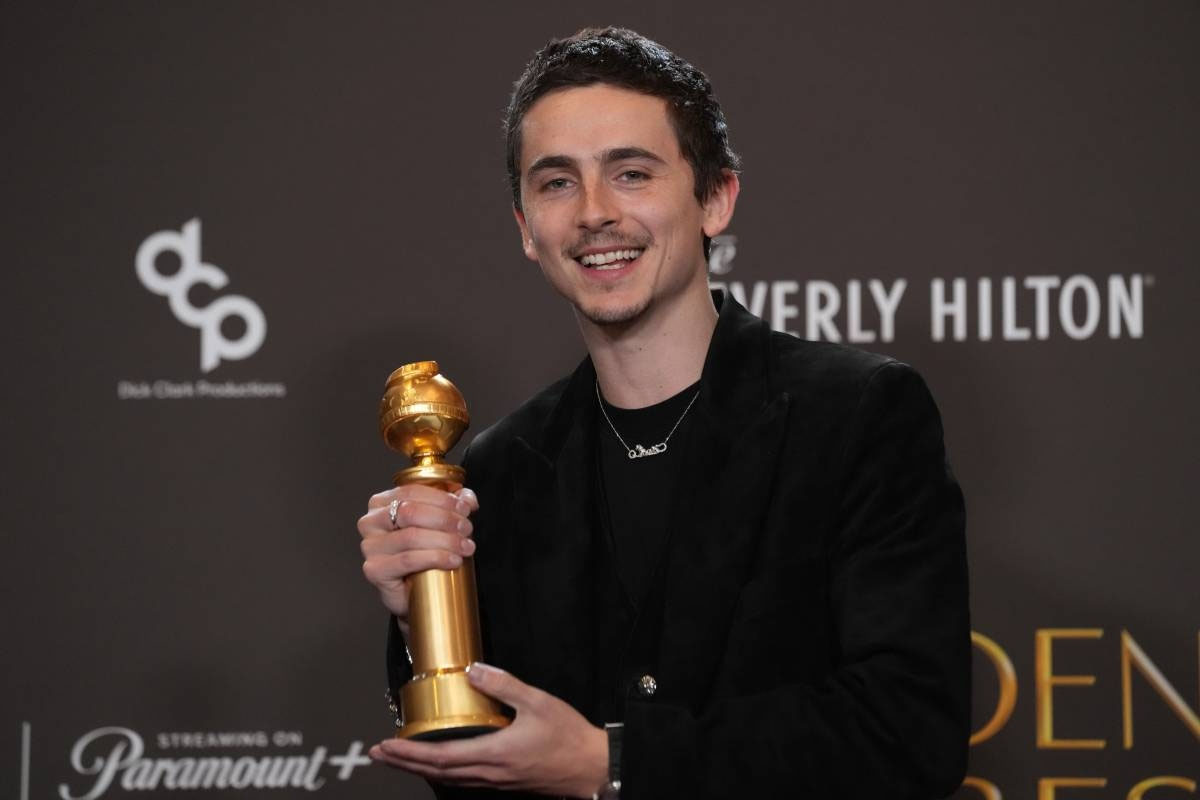
Photo Credit: Getty Images
Timothée Chalamet is finally offering a glimpse into what audiences can expect from Dune Part Three, the concluding chapter of Denis Villeneuve’s sweeping science fiction trilogy. While the actor has largely remained tight lipped about the film, which opens in theaters this December, he recently shared new reflections during a conversation with Matthew McConaughey at a Variety and CNN town hall event held at the University of Texas at Austin. His comments reveal an actor who approached the finale with greater confidence, intensity, and creative freedom than ever before.
Speaking about the evolution of Paul Atreides, Chalamet suggested that the final stretch of the trilogy leans into something darker and more unexpected. He initially compared the arc to performances by McConaughey in Interstellar, Heath Ledger in The Dark Knight, and Marlon Brando in Apocalypse Now. Realizing the weight of that comparison, he quickly laughed and pulled back. Still, his point was clear. These large scale films, he explained, leave room for a surprising twist in performance. A curveball. Something that shifts expectations within the grandeur of spectacle.
That willingness to take risks appears to define his approach in Dune Part Three. Chalamet credited Oscar Isaac, who portrayed Paul’s father Leto Atreides in the first film, as a key inspiration. Isaac approached the role with a Shakespearean intensity, embracing its heightened tone without self consciousness. Watching that performance encouraged Chalamet to take greater liberty in his own portrayal. In the first Dune, he admitted feeling intimidated by the scale and futurism of the project. He had just come off more naturalistic performances in Beautiful Boy and Call Me by Your Name, and the massive scope of Villeneuve’s vision felt overwhelming.
By the third film, however, that hesitation had vanished. Chalamet described a strong creative rhythm with Villeneuve and emphasized the importance of freedom of movement and freedom of choice. He called the final installment the eeriest of the trilogy and described it as a big swing. The tone, according to his comments, suggests a chapter that pushes further into the psychological and moral complexities of Paul Atreides.
Even small details reveal how seriously he took the role this time around. He spoke about returning to the ornithopter sequences, explaining that for the third film he arrived on set early to study the fictional control panels covered in hieroglyphics and symbols untethered to reality. He wanted to invent a personal logic for every button and create a believable dynamic with the technology. That level of preparation reflects a performer determined not to treat any moment casually.
Chalamet also noted that momentum played a role in his heightened intensity. Following acclaimed performances in Marty Supreme and A Complete Unknown, both of which earned him Academy Award nominations for Best Actor, he felt creatively energized. He described the atmosphere during filming as red hot and made it clear that complacency was never an option. Knowing it would be his final time inhabiting Paul Atreides, he treated the experience as sacred.
Dune Part Three, as Chalamet frames it, is not just the conclusion of a trilogy but the culmination of his growth within it. From intimidation to mastery, from restraint to boldness, his journey mirrors that of Paul himself. If his words are any indication, audiences can expect a finale that is intense, unsettling, and unafraid to take risks.