Photo Credit: Getty Images

Malaysia and Indonesia have become the first countries in the world to officially ban Elon Musk’s AI chatbot, Grok, citing its ability to generate sexually explicit deepfakes. Authorities in both nations blocked access to the tool on the X platform after discovering it was being used to manipulate images of real people into revealing or pornographic outfits. Officials expressed specific concern that the AI could be exploited to produce non-consensual imagery involving women and children.

Photo Credit; Getty Images

Meta Platforms Inc. has agreed to buy Manus, a popular Singapore-based artificial intelligence agent with Chinese roots, in a massive effort to build a business around its aggressive AI investment.

The deal values Manus at more than $2 billion, according to people familiar with the matter, marking a rare acquisition of an Asian tech company by a US giant.

This multibillion-dollar bet from Meta CEO Mark Zuckerberg was struck in just 10 days, securing a startup that generated $125 million in annual revenue run rate earlier this year.

Coming amid escalating US-China competition for AI dominance, the move completely severs the startup's ties to Chinese ownership.

"There will be no continuing Chinese ownership interests in Manus AI following the transaction, and Manus AI will discontinue its services and operations in China," a Meta spokesperson confirmed.

Photo Credit; Getty Images

Nvidia has agreed to its largest deal ever, moving to acquire key assets from artificial intelligence chip startup Groq in a transaction valued at roughly $20 billion, according to people familiar with the matter. The agreement, announced Wednesday, gives the semiconductor giant access to Groq's specialized inference technology while stopping short of a full corporate takeover.

Groq, founded in 2016, was built by former Google engineers behind the search giant's tensor processing unit program. Its chips focus on low-latency inference, a fast-growing segment of artificial intelligence workloads where trained models respond to user requests. Nvidia dominates AI training but faces increasing competition in inference, making the Groq technology strategically attractive.

People involved in the deal say Nvidia will license Groq's intellectual property and absorb much of its technical talent, including founder and CEO Jonathan Ross and president Sunny Madra. Groq framed the transaction as a "non-exclusive" licensing arrangement and said it will continue operating independently under new chief executive Simon Edwards. Its GroqCloud business is not included and will continue running separately.

Photo Credit: Getty Images

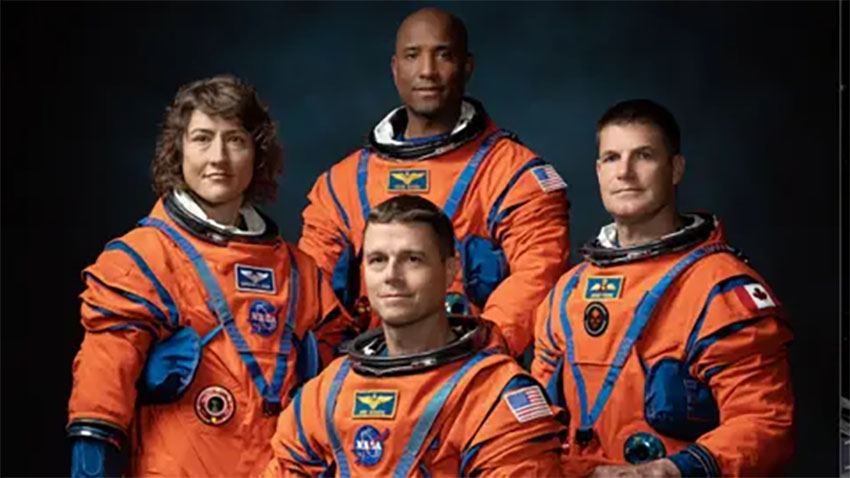
NASA announced on Thursday that it will return four astronauts from the International Space Station (ISS) more than a month ahead of schedule due to a medical issue. This marks the first medical evacuation in the station’s 25-year history. While agency officials confirmed the situation is currently "stable," they declined to release specific details regarding the nature of the condition or the identity of the affected crew member, citing medical privacy protocols.

Photo Credit; Getty Images

Microsoft on Tuesday announced a sweeping $17.5 billion investment in India's cloud and artificial intelligence infrastructure, marking the company's largest financial commitment in Asia and underscoring the country's fast-growing role in the global AI race. The move expands on Microsoft's $3 billion pledge from earlier this year and will roll out over a four-year period.

The announcement followed a meeting between CEO Satya Nadella and Indian Prime Minister Narendra Modi, where the two discussed India's accelerating AI ambitions. Nadella later said the investment would help build the infrastructure, skills, and sovereign capabilities needed for India's "AI-first future," signaling the company's intention to become a central player in the country's emerging technological ecosystem.

Photo Credit; Getty Images

Nvidia has unveiled a new artificial intelligence platform it says could advance the future of self-driving cars, as the chipmaker deepens its push beyond data centres and into physical AI. Speaking at the CES technology show in Las Vegas, chief executive Jensen Huang introduced Alpamayo, a "reasoning" AI system designed to help autonomous vehicles think through complex and unfamiliar driving situations.

Photo Credit; Getty Images
 
China is preparing to impose strict limits on access to Nvidia's advanced H200 chips even after President Donald Trump approved their export, signaling Beijing's determination to prioritize self-sufficiency over dependence on American semiconductor technology. According to individuals familiar with internal discussions, regulators are weighing a system that would allow only tightly controlled, case-by-case access to the H200, Nvidia's second-most powerful AI processor.
 
Under the proposed framework, Chinese buyers would have to apply for permission to purchase the chips and justify why local alternatives cannot meet their performance needs. No final decision has been reached.
 
Trump announced the export approval on Monday in a Truth Social post, saying he told Chinese President Xi Jinping that Nvidia could ship H200 units to "approved customers" under conditions meant to preserve U.S. national security. He also claimed 25% of the revenue from these sales would be paid to the United States, though details of the arrangement remain unclear.
 
The H200 and similar high-performance chips had been barred from China during the Biden administration due to concerns they could bolster China's military or intelligence capabilities. Nvidia has lobbied heavily for the restrictions to be eased, arguing that allowing controlled exports would maintain U.S. dominance by keeping Chinese firms dependent on American technology.
 
But Beijing has used the ban to accelerate its domestic semiconductor ambitions. Agencies including the National Development and Reform Commission and the Ministry of Industry and Information Technology have pushed local chipmakers to close the gap with Nvidia, expanded customs checks, and encouraged data centers to adopt Chinese processors through subsidies. Officials are also considering blocking state-owned entities from buying the H200 entirely.
 
Still, companies such as Alibaba, Tencent and ByteDance continue to prefer Nvidia hardware for large-scale AI training, often relocating model development abroad to access chips restricted at home.
 
Trump's approval faces resistance in Congress, where a bipartisan group of senators has proposed a 30-month freeze on exports of advanced chips, including the H200, to China. Washington may ultimately adopt its own approval process restricting sales only to vetted companies.
 
Meanwhile, Nvidia has already been cleared to ship the weaker H20 chip to China, but Beijing has limited its use, arguing its performance barely exceeds domestic alternatives.
 
Chinese officials offered a cautious response to Trump's announcement, reiterating that cooperation should deliver "mutual benefit." Further regulatory details are still pending.  

RECENT NEWS

LATEST JOB OFFERS

AROUND THE CITIES