

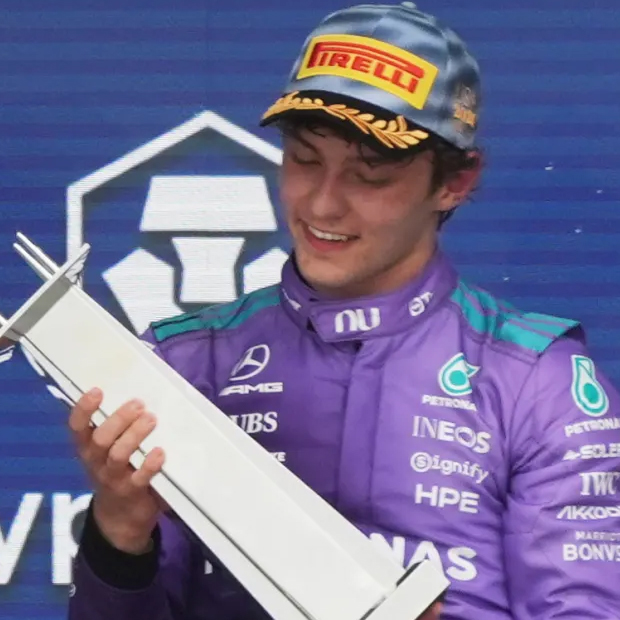
Antonelli topped the timesheets by the narrowest of margins, finishing just 0.04 seconds ahead of Russell. Oscar Piastri placed third for McLaren, only 0.117 seconds behind the session leader.
Piastri's teammate Lando Norris endured a frustrating start to the weekend. The Briton lost around three-quarters of the session because of a hydraulic problem before returning to the track and posting the seventh-fastest time.
Reigning world champion Max Verstappen finished fourth for Red Bull Racing while testing a significant aerodynamic upgrade package. He ended the session 0.281 seconds behind Antonelli.
Fresh from victory at the Spanish Grand Prix, Lewis Hamilton completed the session fifth fastest for Scuderia Ferrari. Ferrari introduced an upgraded engine for the Austrian weekend, but Hamilton was still 0.665 seconds off the pace. The seven-time world champion also appeared dissatisfied with the car, expressing his frustration during a brief radio message aired during the session.
British rookie Arvid Lindblad impressed by securing sixth place for Racing Bulls.
Behind Norris in seventh, Franco Colapinto finished eighth for Alpine, while Swedish driver Dino Beganovic took ninth after stepping into Charles Leclerc's Ferrari for the session.
Oliver Bearman rounded out the top 10 for Haas F1 Team.
The Austrian Grand Prix is expected to provide an important test for Ferrari as the team looks to continue closing the gap to Mercedes. Ferrari has stressed that its latest engine upgrade alone is unlikely to eliminate Mercedes' power advantage. However, the team hopes the new power unit, combined with the aerodynamic improvements introduced at the Spanish Grand Prix, will make it more competitive on Austria's power-sensitive circuit, where it has struggled this season.
McLaren also arrived with planned technical updates but opted not to use a redesigned rear wing after deciding it required further preparation. The new component follows a concept already adopted by Ferrari and Red Bull, using a rotating mechanism to activate its low-drag configuration instead of the traditional front-hinged Drag Reduction System design.