

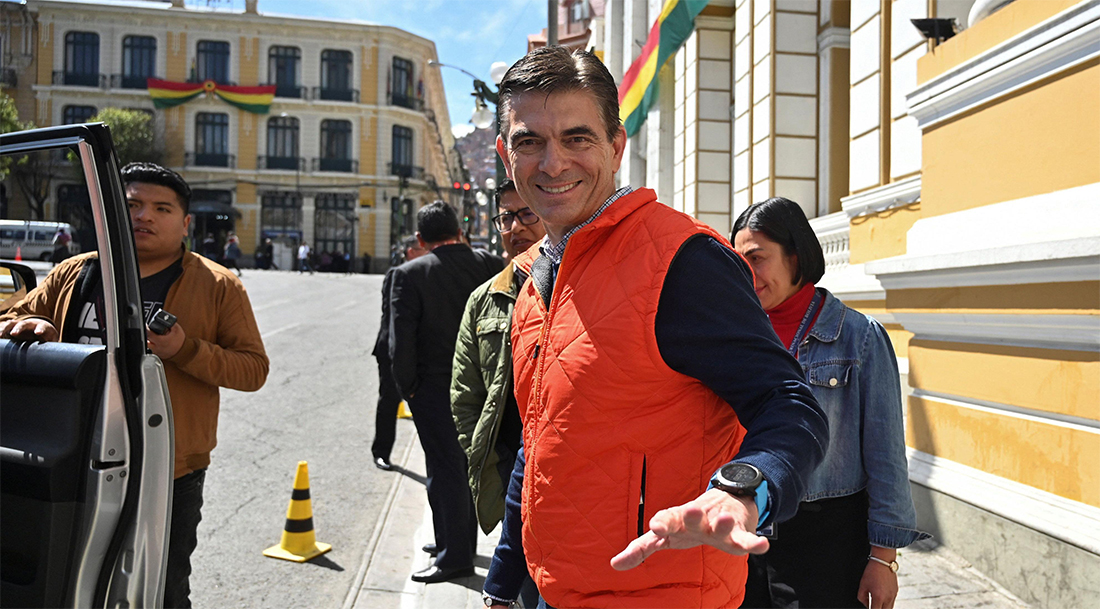
Photo Credit: Getty Images
Rodrigo Paz, a centrist senator from the Christian Democratic Party, has won Bolivia's presidential runoff election, defeating conservative candidate Jorge "Tuto" Quiroga. According to early results, Paz secured 54.5% of the vote, while Quiroga garnered 45.5%. The victory marks the end of nearly two decades of leftist rule, propelled in part by Bolivia's worst economic crisis in a generation. Despite his win, Paz's party lacks a majority in the legislature, requiring him to build alliances to govern effectively.
The 58-year-old senator’s win marks a historic shift for the South American country, governed almost continuously since 2006 by Bolivia’s Movement to Socialism, or MAS, which once enjoyed overwhelming support from the country’s Indigenous majority.
Paz’s moderate platform — pledging to maintain social programs while promoting private sector-led growth — appeared to resonate with left-leaning voters disillusioned by the ruling MAS, founded by former President Evo Morales, but wary of Quiroga’s proposed austerity measures.
Both runoff candidates pledged to strengthen diplomatic ties with Washington — strained since 2009 — and seek US-backed financial support to stabilize Bolivia’s fragile economy.
In late September, Paz unveiled plans for a $1.5 billion economic cooperation deal with US officials to ensure fuel supplies.
US Secretary of State Marco Rubio said this week that both presidential candidates “want stronger, better relations with the United States,” after decades of anti-American leadership. “This election is a transformative opportunity,” he said on October 15.
Bolivia’s fragile economy dominated the runoff campaign. Once plentiful natural gas exports have plummeted, inflation is at a 40-year high, and fuel is scarce. Both candidates campaigned to roll back elements of the MAS era, state-led model, but differed over how drastically. Paz favored gradual reform, including tax incentives for small businesses and regional fiscal autonomy, while Quiroga proposed sweeping cuts and an IMF bailout.
Paz’s campaign was boosted by his running mate Edman Lara, a former police officer known for viral TikTok videos exposing corruption. Lara’s populist appeal helped Paz connect with younger and working-class voters, analysts said.
Economists warn the incoming administration faces immediate challenges, including securing fuel supplies and building coalitions in a fragmented legislature.
The new president takes office on November 8.