

Photo Credit: Getty Images
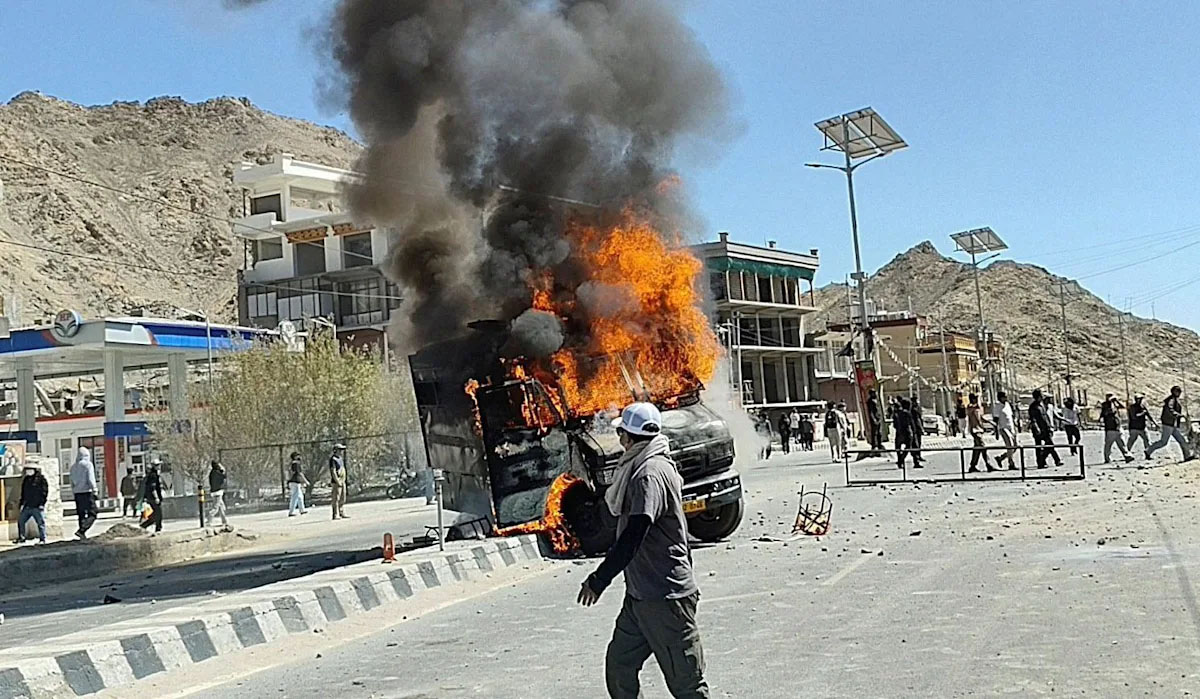
The Himalayan region of Ladakh has been placed under curfew following violent clashes in Leh that left at least four people dead and dozens injured. Demonstrators demanding statehood for the federal territory clashed with security forces, resulting in some of the worst unrest the region has seen in decades. An office belonging to India's ruling Bharatiya Janata Party was set on fire, and a police vehicle was torched during the violence.
The protests were part of a larger movement led by activist Sonam Wangchuk, who has been on a hunger strike calling for the restoration of Ladakh's statehood and increased autonomy. The federal home ministry accused Wangchuk of inciting the violence, citing references he allegedly made to uprisings abroad, though he has firmly denied those allegations. He called off his hunger strike after the clashes, urging calm and reiterating that the movement has always been intended as peaceful.
Ladakh, with a population of around 300,000, was stripped of its semi-autonomous status in 2019 when the government divided the former state of Jammu and Kashmir. This move placed Ladakh under direct federal rule, sparking resentment across its Buddhist and Muslim communities. Once divided in their demands, these groups have since come together in their call for statehood, land protections, and employment guarantees. For many young people in the region, chronic unemployment and a sense of political marginalization have fueled frustration.
Witnesses described Wednesday's unrest as a breaking point after months of peaceful protests and delayed government dialogue. The federal home ministry confirmed that police opened fire in self-defense after being attacked, which led to the casualties. Community leaders such as the head of the Ladakh Buddhist Association expressed regret at the violence but stressed that government inaction had worsened tensions.
The federal government has denied neglecting Ladakh, stating that ongoing talks since 2023 have made progress and accusing politically motivated actors of disrupting the process. Nevertheless, the situation underscores the fragile balance in a region already marked by international tensions, including border disputes with China. The memory of the deadly 2020 clash in the Galwan Valley still looms large, adding urgency to the political crisis. With further negotiations scheduled in the coming weeks, the unrest in Leh has become a stark reminder of Ladakh's volatile politics and the growing impatience of its people.