

Photo Credit: Getty Images
U.S. President Donald Trump pushes ahead with a sweeping 50% tariff on Indian goods, New Delhi is signaling it won't back down easily, particularly when it comes to its agricultural backbone.
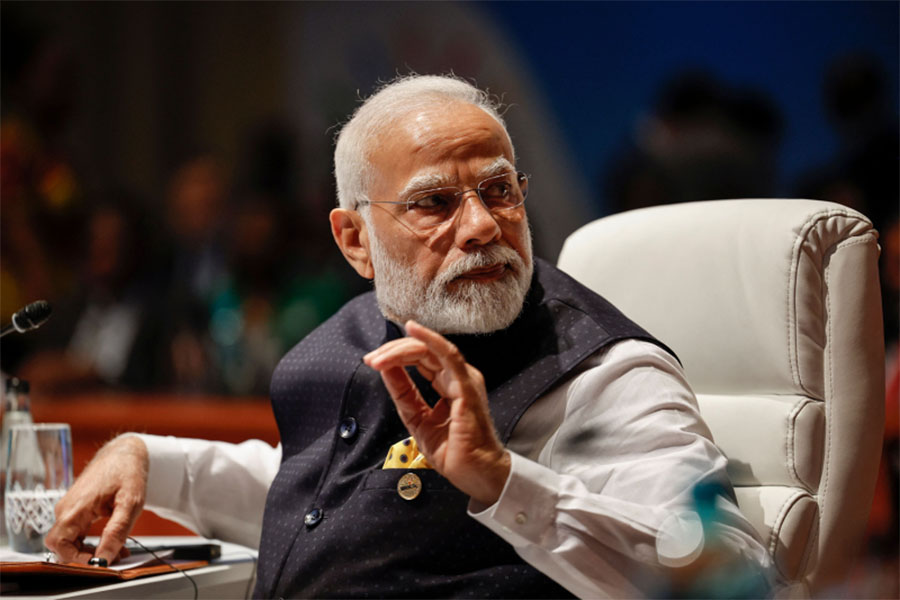
Speaking Thursday, Prime Minister Narendra Modi said, "India will never compromise on the interests of the country's farmers, fishermen, and livestock breeders. I know it will cost me personally, but I am ready." His comments followed Trump's executive order targeting India's continued oil imports from Russia, accusing New Delhi of financing Moscow through bilateral trade.
Despite the shock announcement, India's Sensex index closed 0.1% higher, reflecting confidence in the government's measured, defiant tone. Rahul Gandhi, opposition leader and rival to Modi, called the U.S. move "economic blackmail," pledging rare bipartisan support in the ongoing trade standoff.
While Trump's rhetoric has grown sharper, warning of secondary sanctions, India is playing for time. "The U.S. tariff hike lacks logic," said Dammu Ravi, India's Secretary for Economic Relations. The Modi administration is now engaging diplomatically, with National Security Advisor Ajit Doval heading to Moscow and Modi preparing for a landmark visit to China.
Morgan Stanley estimates India could lose up to $23 billion if all U.S.-bound goods are affected. Meanwhile, SBI Research notes a $20 billion blow if U.S. dairy imports enter the Indian market. Yet India's refusal to fold may lie in its resilience, over 60% of GDP is driven by domestic demand.
Exports most at risk include gems, electronics, seafood, and textiles. Seafood exporters alone face $3 billion in potential losses, and textile firms warn of a $5 billion contraction. Still, India has expanded U.S. oil imports by 120% since February and rolled back duties on bourbon, Harley-Davidsons, and more, moves aimed at goodwill.
With Trump set to meet Putin and Zelenskyy in the coming weeks, the calculus could shift. Until then, India's message is clear: it won't yield under pressure, even as it seeks diplomatic off-ramps.