

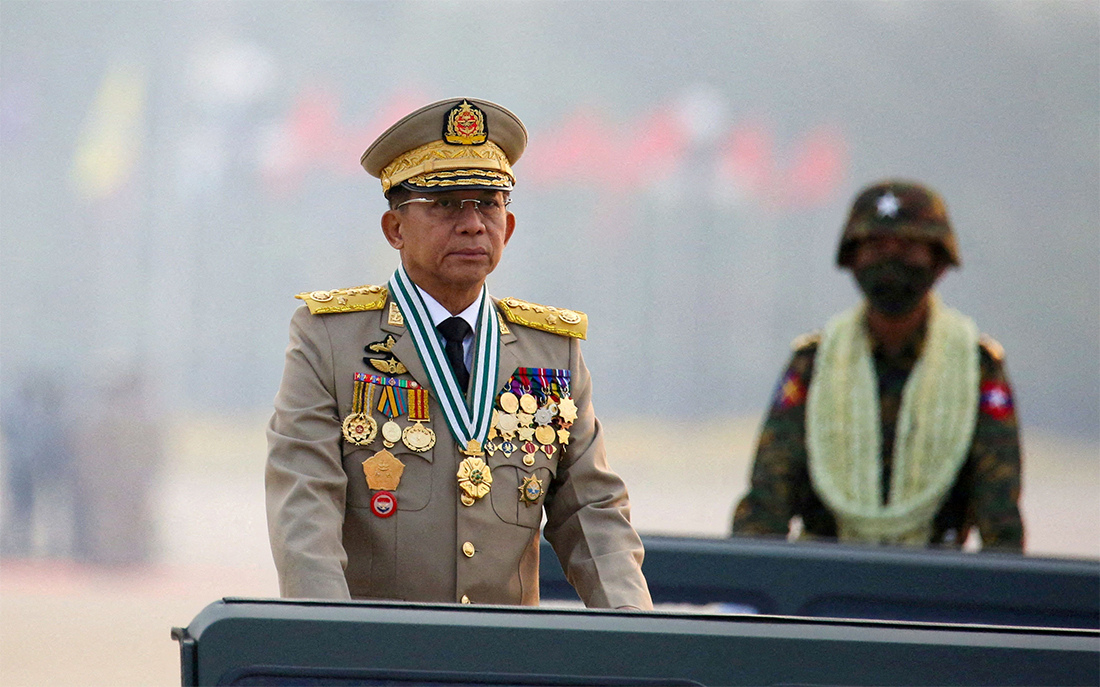
Photo Credit: Getty Images
The political landscape in Myanmar continues to be shaped by military control, even as the country experiences changes in its top ceremonial office. Myint Swe, who was appointed acting president following the 2021 military coup, has died at the age of 74. Though his role was largely symbolic, his presence served as a constitutional veneer for the junta's continued dominance.
Since July 2024, Myint Swe had been on medical leave, suffering from a range of neurodegenerative conditions that significantly limited his mobility and cognitive function. His death, announced by the military leadership, followed a steady health decline that began in early 2023 and included treatment abroad in Singapore earlier this year.
Myint Swe's appointment came in the immediate aftermath of the coup that ousted Aung San Suu Kyi's democratically elected government. While he was technically the acting president, it was clear that real power rested with junta chief Min Aung Hlaing, who has also assumed Myint Swe's ceremonial duties since last year. Now, with Myint Swe gone, Min Aung Hlaing remains both military chief and the de facto head of state.
In recent months, Myanmar's junta has made attempts to shift the narrative by ending the formal state of emergency and establishing an interim government, purportedly to prepare for elections in late 2025 or early 2026. However, critics argue that this is merely a political maneuver to secure ongoing military influence under the guise of democratic reform. Many suspect the upcoming elections will be dominated by military-backed parties, ensuring continuity rather than change.
Myanmar remains deeply fragmented. The country is still in the throes of a civil war between the junta and various ethnic armed groups, and widespread opposition to military rule continues. While the death of Myint Swe might suggest a moment of transition, there are few signs that the country's power dynamics are shifting in any meaningful way.
The state funeral planned for Myint Swe may serve as a national spectacle, but it will likely not change the underlying political realities. Until true democratic processes are restored, Myanmar remains a nation tightly controlled by its military, with even ceremonial leadership serving to reinforce that structure.