

Photo Credit: Getty Images
China has introduced new export controls on critical electric vehicle (EV) battery technologies, a move that is likely to intensify the ongoing global competition over clean energy resources and innovation. The Chinese Ministry of Commerce has mandated government approval for the overseas transfer of specific technologies related to lithium processing and the production of lithium iron phosphate (LFP) batteries—key components in the global EV supply chain.
This decision underscores China's strategic intent to safeguard its technological advantage in battery development, a sector where it currently holds a dominant position. According to industry analysts, China accounts for 94 percent of the world's LFP battery production capacity and 70 percent of lithium processing. Chinese firms, including CATL and BYD, lead the global battery market, supplying both domestic and international automakers.
While the official explanation cites national security and the need to strengthen global cooperation, the move is widely interpreted as part of China's broader policy to maintain control over advanced technologies amid growing geopolitical tensions. This development could affect the expansion plans of Chinese battery manufacturers in countries such as Germany, Hungary, Spain, Brazil, and Thailand.
For now, experts suggest that the direct impact may be limited since most of the foreign facilities in question focus on battery assembly rather than the restricted upstream processes. Nonetheless, the decision is expected to prompt renewed efforts by Western governments and companies to develop independent battery manufacturing capabilities.
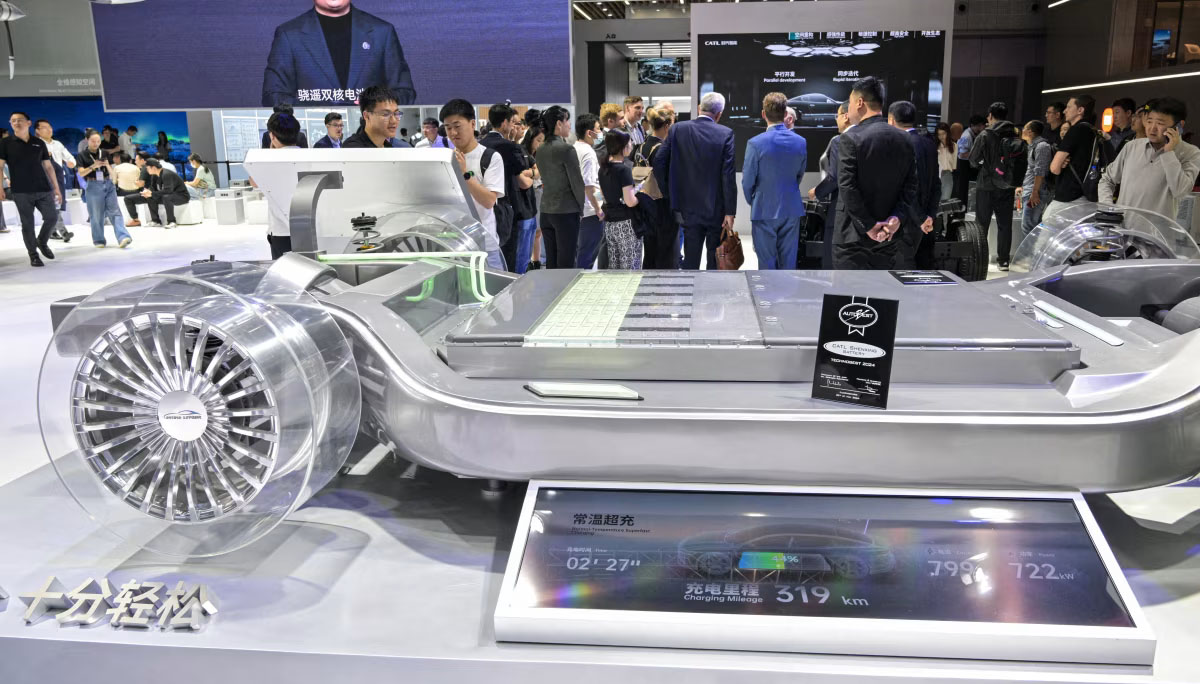
The technological innovations at the center of these restrictions are considerable. For instance, BYD's latest EV platform offers a range of up to 250 miles on a five-minute charge. CATL has gone further, unveiling a battery with a range of 320 miles on the same charge time. Such advancements reflect China's continued leadership in this critical field.
As countries seek to secure their own positions in the evolving EV market, China's policy may become a turning point in how governments and industries approach the future of energy technology.