

Photo Credit: Getty Images
The U.S. military unleashed a fresh wave of airstrikes on Iran early Wednesday. It marked the fourth consecutive night of attacks on the country. Any hope of a lasting ceasefire now appears to be crumbling fast.
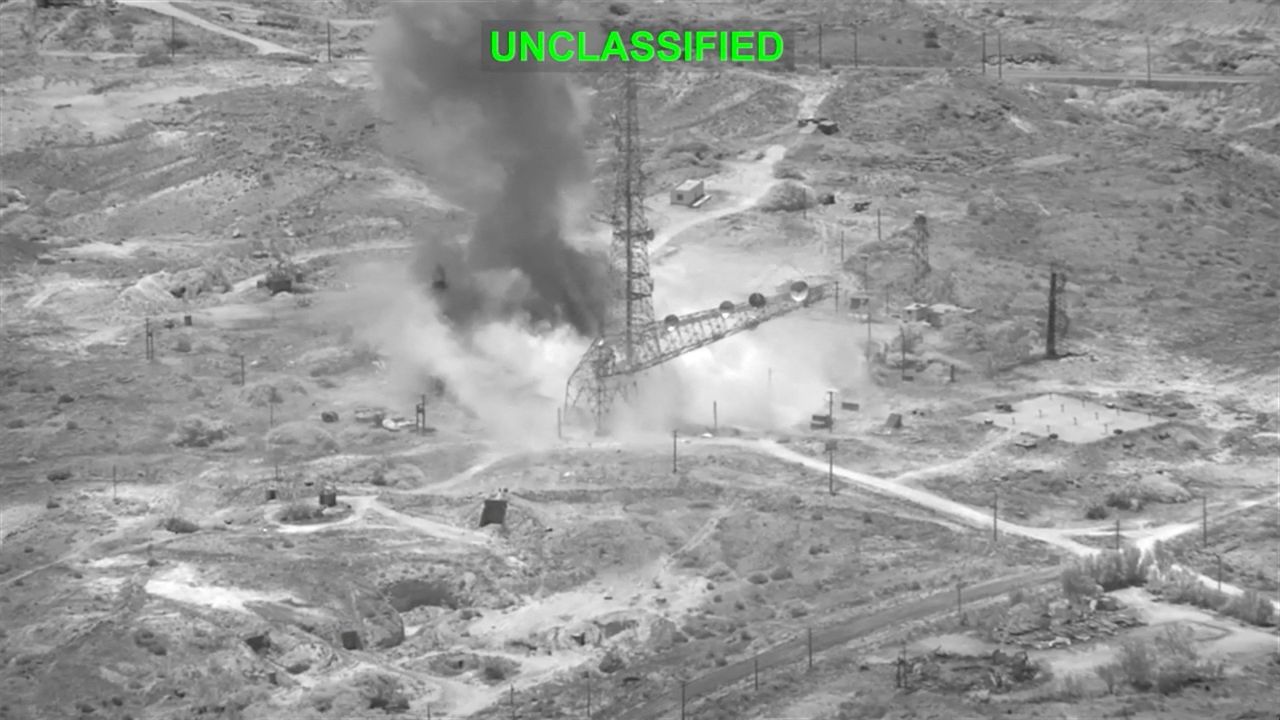
U.S. Central Command said the strikes began around 6 a.m. Eastern time and wrapped up ninety minutes later. Precision munitions hit coastal defense systems as well as cruise missile storage and launch sites on Greater Tunb Island. Officials said the goal was degrading Iran's ability to threaten commercial shipping through the Strait of Hormuz.
President Trump made clear the assault is far from over. "We're going to hit them very hard tonight," he said on Fox News, vowing harsher strikes were coming. He promised to knock out Iran's power plants and bridges next week if Tehran refuses to negotiate.
Iran isn't backing down either. Jordan, Bahrain, and Kuwait all came under renewed attack Wednesday as Tehran vowed to keep striking U.S. military assets in the region. The fragile ceasefire from last month now lies in tatters.
Tehran has also threatened to shut down even more energy shipping routes. That threat followed Trump's decision to reinstate the U.S. naval blockade of Iranian vessels. The Strait of Hormuz, already largely closed, remains the biggest flashpoint.
Oil markets are already feeling the strain. Brent crude futures climbed Wednesday and held above $85 a barrel. Shipping industry leaders say the constant reversals coming out of Washington are only adding to the chaos.
Trump had also threatened a 20% toll on all cargo passing through the Strait of Hormuz earlier this week. He abandoned that plan by Tuesday. Gulf states, he said, would instead invest directly in the United States.
Trump himself has already declared the ceasefire dead. Analysts now warn the fighting could drag on indefinitely. One expert called the conflict's terms unrealistic from the very start and said neither side appears ready to back down.
"I cannot see a positive outcome any time soon," warned Mike Rosenberg, a management professor at Spain's IESE Business School. He said the White House misjudged Iran's resolve from the outset. A lasting resolution, he added, may not arrive before this year's midterm elections.