

Photo Credit: Getty Images
Director Joseph Kosinski, best known for Top Gun: Maverick, is looking back at the daring production of his latest blockbuster, F1: The Movie — a high-octane racing drama that has become one of the year’s biggest cinematic events. Joined by Brad Pitt, Damson Idris, Sarah Niles, producer Jerry Bruckheimer, and co-producer Lewis Hamilton, Kosinski recently sat down with SAG-AFTRA Foundation national director Rochelle Rose for a post-screening discussion on what it took to make the film both authentic and exhilarating.
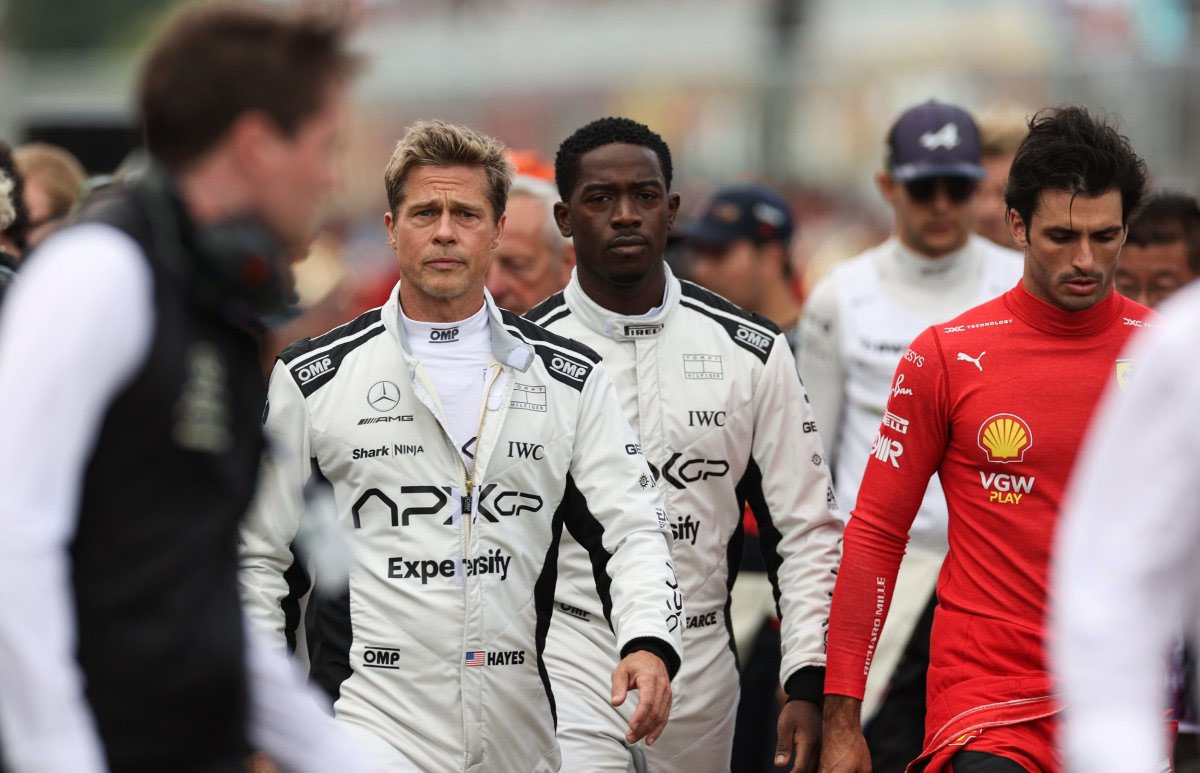
The director admitted that the filming process was unlike anything he had ever done before. “Looking back, I think, ‘God, that was pretty reckless,’” Kosinski confessed, referring to the production’s relentless pace and daring stunts. Much of F1 was shot live during actual Grand Prix events, meaning the team had only minutes to capture scenes that would normally take hours or even days. “Because we wanted to shoot this film live at the Grand Prix while the events were going on, we’d often only get a few minutes,” he explained. “There were times where I’d tell Brad and Damson, ‘We’ll be lucky to get three takes at this.’”
One such instance was during the Silverstone sequence — the movie’s adrenaline-charged opening. “We actually shot three scenes back-to-back in about 15 minutes,” Kosinski revealed. That ambitious approach paid off: the resulting footage has been praised for its intensity and realism.
The realism extended beyond the camera. Pitt and Idris were not just acting; they were truly driving modified Formula 2 cars at speeds reaching 180 miles per hour. Lewis Hamilton, a seven-time Formula 1 World Champion and co-producer on the film, personally oversaw their training. “Brad Pitt and Damson practiced for four months with Lewis overseeing part of it,” Bruckheimer said. “They’re actually driving these cars. It’s not CGI — it’s the real deal. They put their lives on the line to make this as authentic as possible.”
Kosinski credited the cast’s commitment and Apple Studios’ technological innovation for making the film possible. “Apple developed new camera systems that let us capture the races in ways no one’s ever seen before,” he said. “That Apple put their faith in us to actually shoot a movie this way is pretty amazing. Luckily, we pulled it off.”
Hamilton echoed that sentiment, calling the new cameras “an incredible evolution of technology.” He added, “The footage we have from the cars is even better than what you see when you watch Formula 1. I’m sure at some point, Formula 1 will want to use those cameras — though they’re pretty heavy with all that gear.”
Beyond the breathtaking visuals, F1 also finds its heart in story and emotion. “It’s the energy they put into the script that creates emotion,” Bruckheimer said. “That’s what moves you. Brad, Lewis, and Joe spent months refining it with the writers to make it the best it could be.”
Pitt, who stars as a veteran racer mentoring a young driver (played by Idris), shared that the movie’s soul comes from the purity of the sport. “It really stemmed from that,” he said. “Winning is one thing, but it’s about that feeling — the purity, the presence — where you don’t question or doubt, you just are.”
Released in theaters on June 27 by Warner Bros., F1 sped past expectations, grossing over $628 million worldwide. The film will soon hit Apple TV on December 12, giving fans another chance to experience the roaring engines, emotional depth, and cinematic innovation that made it a landmark racing film.
At the end of the discussion, Kosinski smiled as he recalled the chaos of filming amid roaring crowds and screeching tires: “It was intense, risky, and absolutely worth it.”






