

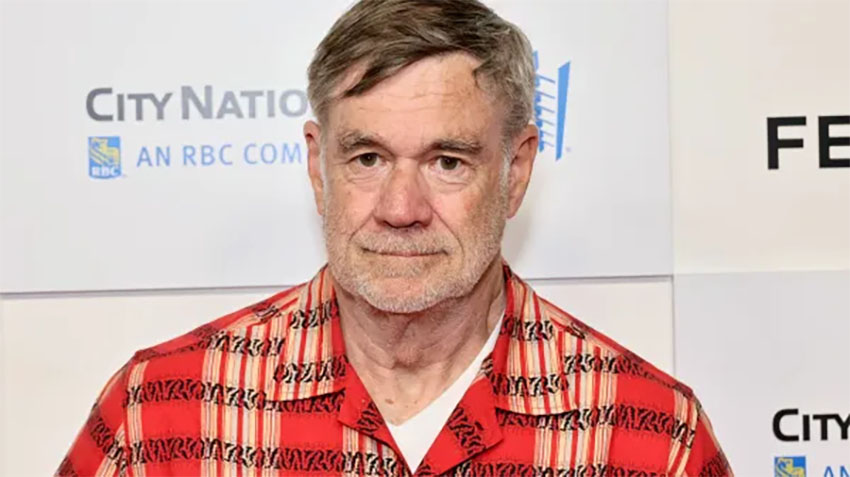
Photo Credit: Getty Images
For more than forty years, Gus Van Sant has built a body of work that reflects lived experience with unusual sensitivity and restraint. From Drugstore Cowboy to Good Will Hunting and now Dead Man’s Wire, his films often draw from real events or personal histories while resisting easy sensationalism. Instead, Van Sant focuses on emotional truth, character and atmosphere, allowing stories to unfold in ways that feel both intimate and unsettling.
Van Sant says his interest in true stories comes from a desire to find a fresh way into material that may already be familiar. If a story is one he knows or has encountered before, the challenge is discovering a new angle that excites him creatively. Over time, this instinct has guided him through films inspired by street hustlers in My Own Private Idaho, a real life murder case in To Die For, and the lives of young men shaped by elite academic culture in Good Will Hunting.
Despite the inherent drama of real events, Van Sant remains cautious about what can truly sustain a feature film. He explains that while a strong beginning is often easy to spot, finding a story that holds together through the middle and ending is far more difficult. Once casting, locations, production design and other elements enter the process, even the strongest structure can be tested. For Van Sant, filmmaking becomes a constant adjustment, pushing and pulling every piece to see if the core story still works.
His approach to historical accuracy varies from project to project. Films like Milk and Dead Man’s Wire stay close to documented facts, while To Die For embraced invention under the guidance of screenwriter Buck Henry. In that film, certain iconic moments were created to express metaphorical truth rather than literal events, a balance Van Sant feels is sometimes essential to capturing a story’s deeper meaning.
Elephant marked another shift. Initially conceived as a more direct examination of the Columbine shooting, the film evolved into a broader portrait of school life and the subtle pressures surrounding youth violence. By focusing on environment rather than explanation, Van Sant found greater freedom to explore the quiet signals and emotional undercurrents that can shape tragic outcomes.
With Milk, accuracy mattered deeply, yet restraint proved equally important. Van Sant credits screenwriter Dustin Lance Black for removing the courtroom spectacle surrounding Dan White and focusing instead on Harvey Milk’s life and legacy. This decision ensured the film remained centered on its subject rather than his killer. Even so, Van Sant admits to occasionally embracing dramatic moments whose factual basis remains uncertain, especially when they capture the spirit of a person as vividly as the truth might.
Dead Man’s Wire continues this tradition. Based on the 1977 hostage crisis involving Tony Kiritsis, the film combines meticulous detail with dark humor and psychological insight. Van Sant was drawn to the script’s balance and its contained structure, as well as moments that reveal character through small, human gestures rather than spectacle. The inclusion of real news footage further grounds the story in its historical moment.
Looking back, Van Sant sees connections across his career that only become clear in hindsight. Dead Man’s Wire echoes Drugstore Cowboy in its focus on flawed antiheroes and moral ambiguity. For Van Sant, this realization feels like a full circle moment, a reminder that even across decades, the same questions about identity, freedom and consequence continue to shape his work.
Dead Man’s Wire opens in limited release on January 9 2026, with a wide release following on January 16. Starring Bill Skarsgård alongside an acclaimed ensemble cast, the film stands as the latest chapter in a career defined by curiosity, compassion and a steady commitment to telling stories that feel real.






