

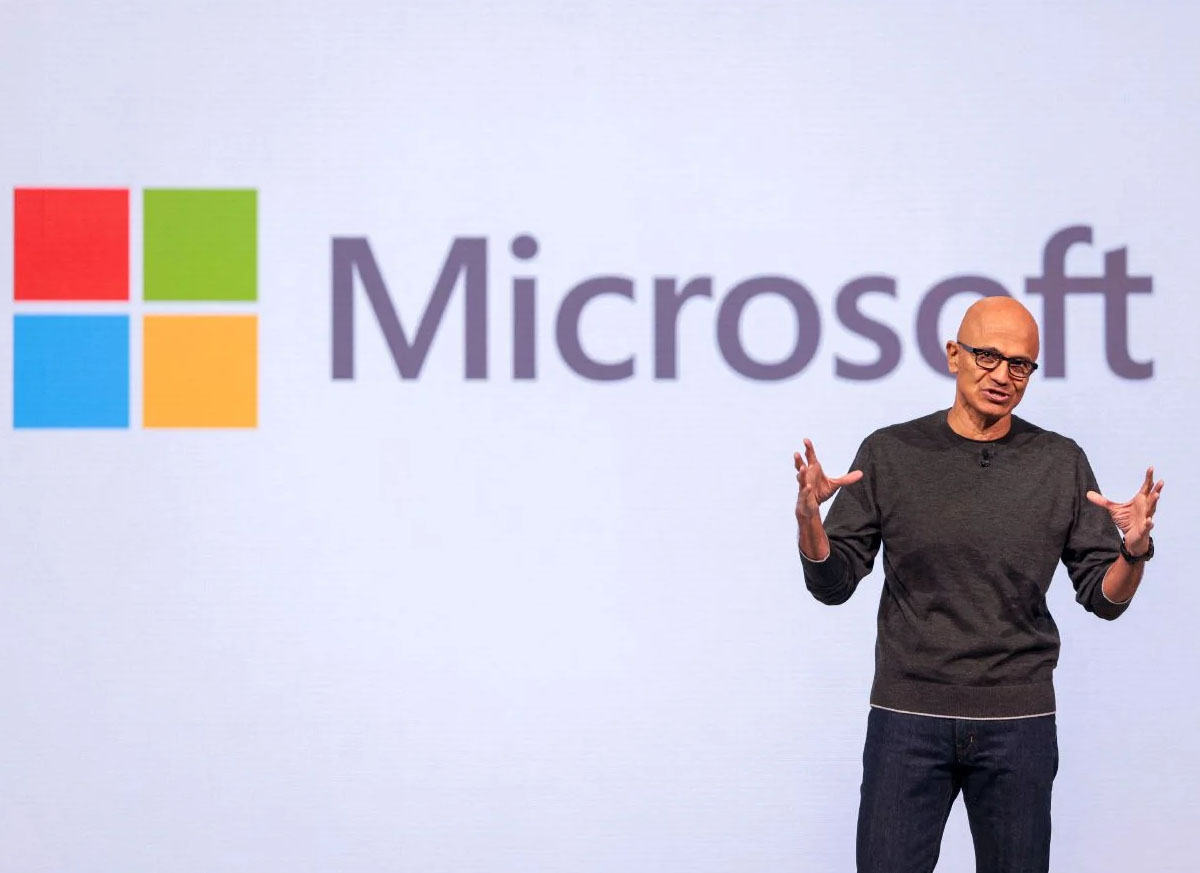
 Photo Credit; Getty Images
Microsoft on Tuesday announced a sweeping $17.5 billion investment in India's cloud and artificial intelligence infrastructure, marking the company's largest financial commitment in Asia and underscoring the country's fast-growing role in the global AI race. The move expands on Microsoft's $3 billion pledge from earlier this year and will roll out over a four-year period.
The announcement followed a meeting between CEO Satya Nadella and Indian Prime Minister Narendra Modi, where the two discussed India's accelerating AI ambitions. Nadella later said the investment would help build the infrastructure, skills, and sovereign capabilities needed for India's "AI-first future," signaling the company's intention to become a central player in the country's emerging technological ecosystem.
India has become a magnet for Big Tech, drawing major infrastructure commitments from Google, which recently pledged $15 billion, and Amazon Web Services, which committed another $8 billion. Modi has framed the country's AI strategy as a national priority, emphasizing sovereignty, digital public platforms, and opportunities for India's vast workforce.
Microsoft's plans include expanding hyperscale cloud capacity and deepening its "sovereign cloud" offerings across multiple regions. A flagship component of the investment is the upcoming India South Central region, a large hyperscale buildout in Hyderabad scheduled to go live in mid-2026. The company is also strengthening
existing data centers in Chennai, Hyderabad, and Pune to support low-latency AI workloads for enterprises, startups, and the public sector.
Alongside infrastructure, Microsoft is doubling down on workforce development. It has raised its commitment to train 20 million Indians in AI skills by 2030, noting that 5.6 million people have already been trained under earlier initiatives. The company says these programs have contributed to more than 125,000 job placements or entrepreneurial opportunities in the past year alone.
Microsoft is also integrating Azure AI tools into two major government platforms, e-Shram and the National Career Service, aiming to enhance support for more than 310 million informal workers. Features such as AI-assisted job matching, multilingual access, predictive analytics, and automated resumé support are expected to broaden access to social protections and employment pathways.
Indian officials hailed the investment as a sign of the country's emergence as a reliable global tech partner and a pivotal player in shaping AI at population scale






