

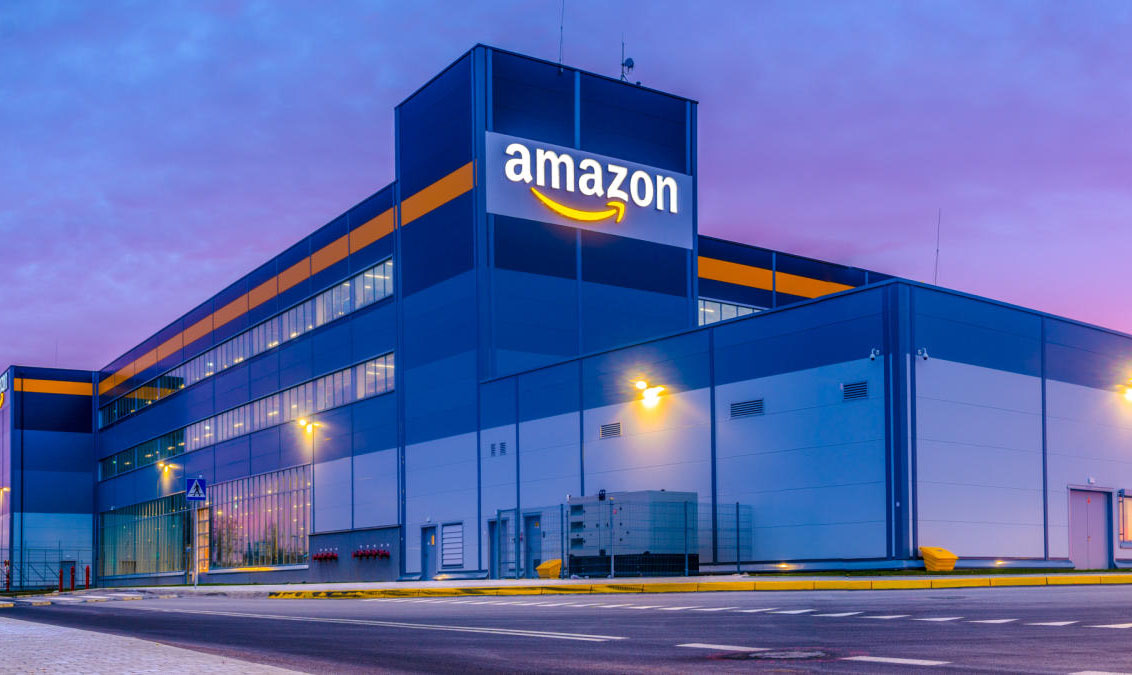
Photo Credit:Getty Images
Amazon has claimed the top spot on the Fortune 500 list, displacing Walmart after the retailer's uninterrupted 13-year run as America's highest-revenue company.
The latest ranking, built on fiscal 2025 figures, places Amazon first, Walmart second, and UnitedHealth Group third.
It marks the first time since 2013 that Walmart has been knocked off the summit of the prestigious annual list.
Amazon pulled in approximately $717 billion in revenue during the most recent fiscal year, edging past Walmart's $713 billion. UnitedHealth Group trailed considerably, posting $447.6 billion.
Amazon's climb was powered by explosive growth across its many business arms, spanning e-commerce, cloud infrastructure, digital advertising, and third-party marketplace services.
The company's year-on-year revenue expansion clocked in at roughly 12%, far outstripping Walmart's comparatively modest 5% growth rate.
Walmart, though still the dominant force in traditional brick-and-mortar retail across the United States, could not keep pace with Amazon's rapidly diversifying revenue streams.
Amazon Web Services, the company's cloud computing division, generated close to $129 billion in 2025 alone, cementing its status as one of the most profitable technology businesses on the planet.
Amazon's advertising arm also delivered a substantial contribution, bringing in upwards of $68 billion and further reinforcing the breadth of the company's commercial reach.
The Fortune 500, published annually, ranks American companies by total revenue and is widely regarded as one of the most closely watched benchmarks of corporate scale and influence.
Walmart had held the top position since 2012, surviving multiple waves of e-commerce disruption, a global pandemic, and years of aggressive competition from Amazon itself.
The dethroning signals a broader shift in how revenue is generated at the very top of American enterprise, away from store-led retail and toward diversified, technology-driven business models.
Amazon's ascent reflects more than a single strong fiscal year, it reflects a structural transformation that has been building steadily, and visibly, for well over a decade.