

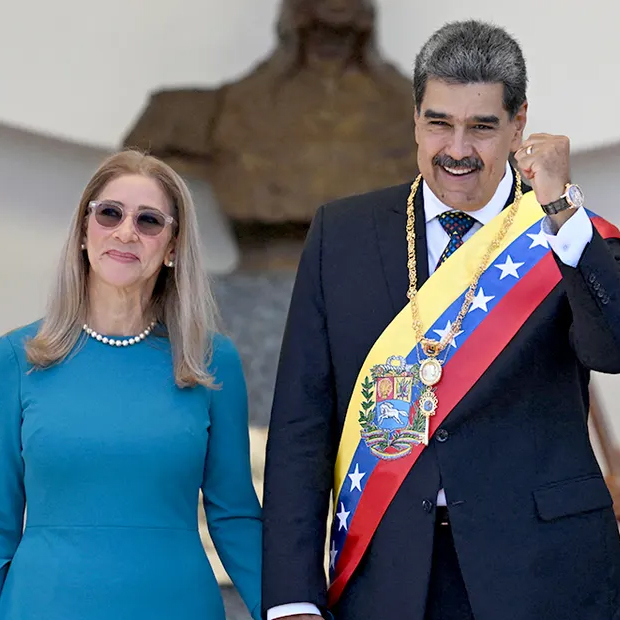
Photo credit: Getty images
Former Venezuelan president Nicolás Maduro and his wife, Cilia Flores, are scheduled to stand trial in New York on June 1, 2027, following a dramatic series of events that has attracted international attention and intensified political tensions between the United States and Venezuela.
The trial stems from allegations involving weapons and drug related offenses, charges that both Maduro and Flores strongly deny. Their appearance before a federal judge this week marked another milestone in a legal case that has generated fierce debate across political circles worldwide.
Maduro and Flores were brought to the United States after American forces conducted a controversial operation in Caracas earlier this year. According to authorities, the couple was seized from their residence during a nighttime mission and transported to New York to face prosecution.
The courtroom hearing drew significant public interest. Spectators reportedly lined up for hours in hopes of seeing the former Venezuelan leader. Court officials reminded attendees to maintain proper decorum and avoid interacting with the defendants throughout the proceedings.
Maduro appeared in court wearing a beige detention uniform and listening to proceedings through translation headphones. Observers noted that he remained composed throughout the hearing, quietly consulting with his legal team before briefly acknowledging members of the public as he departed the courtroom.
A pretrial hearing has been scheduled for November 17, during which both sides are expected to present legal arguments. One of the central issues likely to emerge is Maduro's claim to sovereign immunity. His attorney, Barry Pollack, has indicated that the defense will argue that Maduro should be protected from prosecution because of his status as a former head of state.
Outside the courthouse, demonstrators gathered to express opposing views. Antiwar activists criticized the American operation that resulted in Maduro's capture, describing the proceedings as politically motivated. Some protesters carried signs calling for his release and denounced the trial as illegitimate.
Others welcomed the prosecution. Venezuelan expatriates who attended the hearing expressed support for the legal process, arguing that Maduro should be held accountable for actions they believe contributed to Venezuela's political and economic crisis.
The case is expected to remain highly controversial as it moves toward trial. Beyond the criminal allegations, it raises significant questions about international law, sovereignty, and the extent of American authority in pursuing foreign political figures.
With nearly two years remaining before the scheduled trial date, legal experts anticipate numerous challenges and motions that could shape the proceedings. Regardless of the outcome, the trial promises to become one of the most closely watched international legal cases of the decade, carrying implications far beyond the courtroom itself.