

Photo credit: Getty images
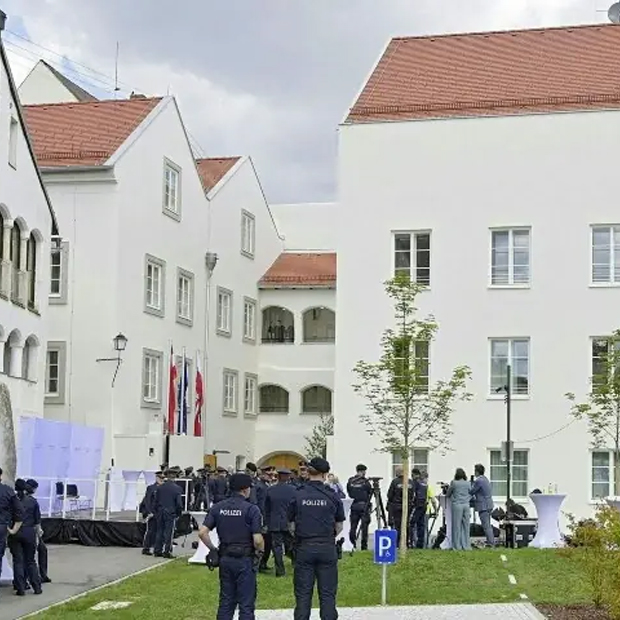
A building long associated with one of history's darkest figures has officially entered a new chapter. The house where Adolf Hitler was born in 1889 has reopened as a police station, a move Austrian authorities hope will permanently discourage neo Nazi groups from treating the site as a symbolic destination.
Located in the town of Braunau am Inn near the German border, the building has been the subject of decades of debate. Austria's government ultimately acquired the property through compulsory purchase in 2017 before announcing plans to renovate and repurpose it for official state use.
The decision reflects a deliberate effort to remove any sense of historical mystique surrounding the structure. Authorities have intentionally avoided emphasizing its connection to Hitler. Today, the building's exterior bears only a simple sign reading "Police," while a memorial stone from the Mauthausen concentration camp remains nearby with the inscription "Never again fascism."
Officials involved in the project argue that transforming the site into a functioning police station removes opportunities for extremist groups to celebrate Hitler's legacy. Historians note that Hitler lived in the house only briefly as an infant before his family relocated elsewhere.
Mayor Johannes Waidbacher, who participated in discussions regarding the building's future, said local residents have generally accepted the decision. While some alternatives were considered, including retaining charitable functions, officials ultimately concluded that a government facility would best limit public access and discourage inappropriate attention.
Not everyone agrees with the approach. Some historians, activists, and Holocaust remembrance groups have argued that the site should do more to educate visitors about Nazi crimes and Austria's role during the era. Critics fear that minimizing the building's historical significance could contribute to forgetting important lessons from the past.
Robert Eiter of Austria's Mauthausen Committee questioned whether converting the property into a police station adequately addresses its historical importance. He argued that preserving public awareness of Nazi atrocities remains essential to preventing future extremism.
The debate reflects broader questions about how societies should handle locations connected to painful historical events. Austria itself has spent decades reassessing its relationship with its Nazi past. While the country once portrayed itself primarily as a victim of Nazi Germany, it now increasingly acknowledges the participation of many Austrians in the regime's crimes.
For many Braunau residents, however, the conversion represents a practical solution. Supporters believe it reduces the likelihood of extremist gatherings while allowing the town to move forward.
Whether the project succeeds in eliminating the site's symbolic appeal remains uncertain. Nevertheless, Austria's decision marks a significant attempt to transform a controversial landmark into a place associated with public service rather than historical notoriety.