

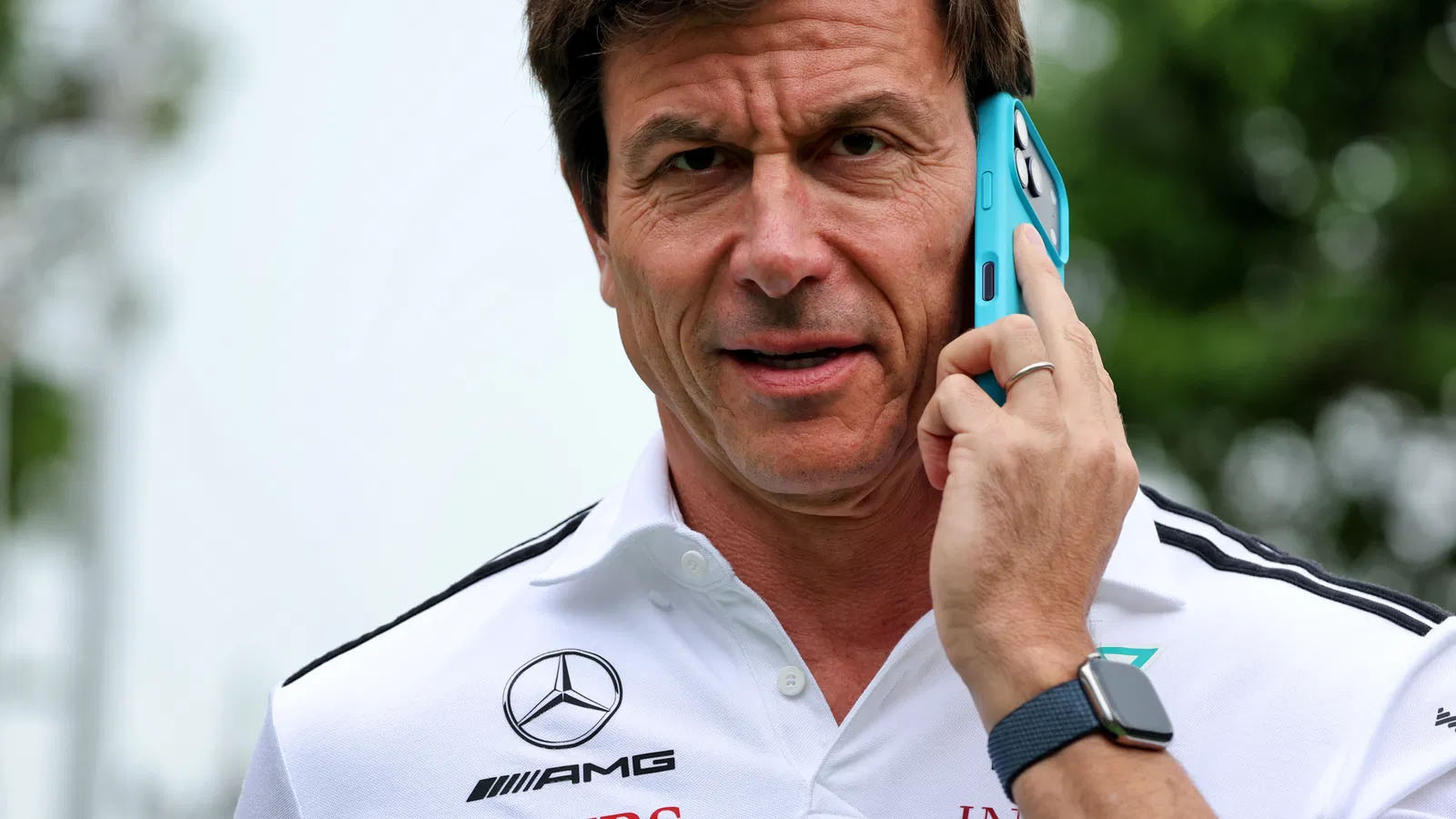
Photo Credit: Getty Images
Toto Wolff has sold a slice of his shareholding in Mercedes Formula 1 to American billionaire George Kurtz, a move that locks in a record valuation for one of the sport’s most successful modern teams. The deal values Mercedes F1 at six billion dollars, or four point six billion pounds. It also confirms the scale of Formula 1’s growth and the strength of Mercedes as a commercial powerhouse.
Wolff owns one third of the team through his holding company, so selling fifteen percent of that stake means he has parted with a five percent share of the entire team. The sale earns him about three hundred million dollars. Even so, he stays in full control. His roles as team principal and chief executive officer remain unchanged, and the team’s governance structure continues as it is.
Kurtz is the founder of cybersecurity firm Crowdstrike, a long standing Mercedes partner. The money for the purchase comes from his personal funds, not his company. At fifty five, he brings a mix of business scale and real racing experience, which Wolff praised as a rare blend. Wolff said Kurtz understands the pressure of competition and the challenge of building a global technology business, something that is becoming more relevant as Formula 1 keeps shifting toward data, digital growth, and worldwide branding.
Kurtz will not join the main board but will take a seat on the team’s strategic steering committee, which includes Wolff, Mercedes chairman Ola Kallenius and Ineos chairman Sir Jim Ratcliffe. His description of the role is simple. He sees it as a seat at the table where he can contribute to discussions rather than drive major decisions.
The valuation reflects a sharp rise in what Formula 1 teams are worth. When Ineos bought their one third stake in Mercedes for two hundred and eight million pounds in 2020 the team was valued at a fraction of today’s figure. Since then interest in the sport has expanded through global sponsorship deals, stronger broadcast income, and the impact of the cost cap that brought more predictable spending across the grid. Team valuations have jumped as a result.
The sport has also grown in reach. A wave of new fans has come in from the United States, helped by the Drive to Survive series and the addition of races in Austin, Miami and Las Vegas. Kurtz sees this as a long runway for growth. He believes valuations will keep rising as Formula 1 strengthens its foothold in the US and continues to build global interest.
Mercedes remain one of Formula 1’s two most valuable teams along with Ferrari. Their revenues come from sponsorship, licensing, prize money and technical supply deals such as selling gearboxes to Williams and Aston Martin. The team is second in this season’s constructors championship with three races left. Lead driver George Russell has taken two wins so far and sits fourth in the drivers standings behind Lando Norris, Oscar Piastri and Max Verstappen.
The sale marks a major financial moment for Mercedes F1 and for Wolff personally. It confirms the team’s position near the top of global sports valuations and adds another high profile figure to its leadership circle while keeping Wolff firmly in charge of the project he has built over the past decade.