

Photo Credit: Getty Images
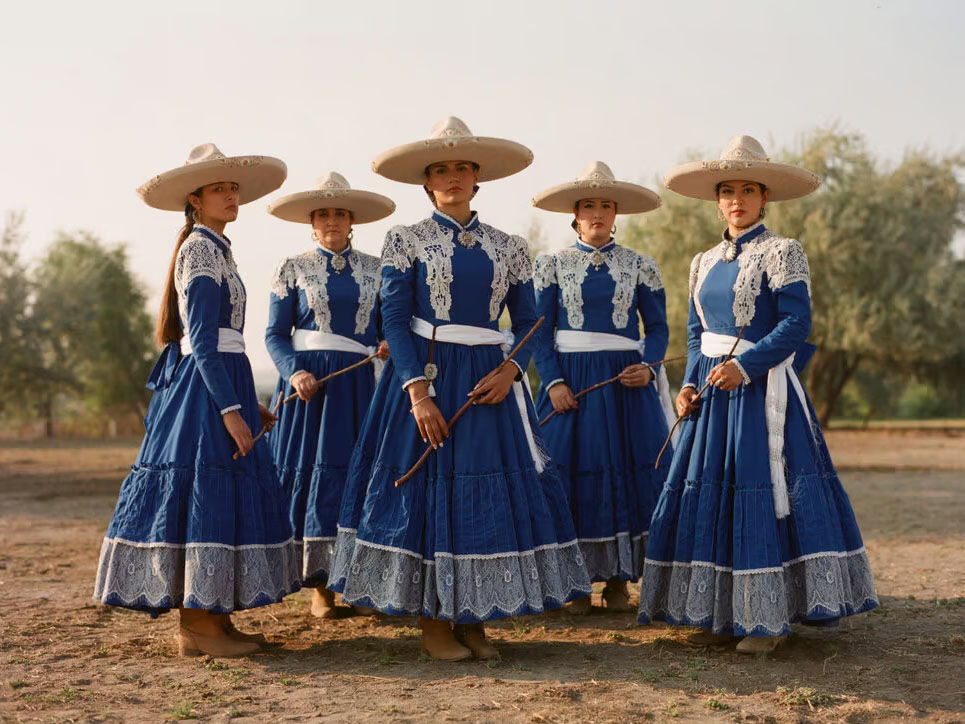
Escaramuza, the all female equestrian discipline rooted in Mexican heritage, challenges the usual image associated with cowgirl culture and offers a strikingly different portrayal of strength, artistry and identity. The sport requires strict adherence to traditional aesthetics. Competitors line up before each event to have their elaborate Victoriana dresses assessed under exacting guidelines.
Every detail must be perfect, from the lace trimmed gowns long enough to cover the horse's haunches to the identical boots and carefully steamed petticoats hidden beneath. Any missing layer, even a single forgotten bloomer, can disqualify an entire team. When they finally enter the arena, the riders create a breathtaking spectacle as they perform synchronized routines side saddle. Their vivid dresses swirl in dramatic bursts of motion, contrasting the disciplined power of the horses beneath them.
Photographer Constance Jaeggi spent nearly two years immersed in the world of escaramuza across multiple US states. Initially drawn by the stunning visuals, she soon discovered a deeper narrative about feminism, migration and sacrifice.
Her work, featured in an exhibition at The National Cowgirl Museum and Hall of Fame and in her forthcoming book, highlights the duality of calm imagery set against the emotional intensity captured by poets Ire'ne Lara Silva and Angelina Sáenz. Their accompanying bilingual poems reveal the tensions felt by participants who strive to honor tradition while navigating the pressures of gender expectations.
Jaeggi's subjects were primarily first and second generation immigrants who supported each other through financial and personal challenges. Many spoke of years spent working toward the resources needed to participate in a sport often reserved for the wealthy in Mexico.
Fundraising, shared expenses and communal support were common themes, illustrating how deeply they valued their cultural heritage. Yet discussions of immigration remained sensitive, particularly among undocumented riders who felt vulnerable in the current political climate.
The women also grappled with the sport's historically rigid gender ideals. Side saddle riding itself is tied to outdated notions about female purity and social value. Some riders described the difficulty of pushing against these limitations while still preserving the traditions they cherished. Others, including queer team members, shared experiences of confronting the sport's implicit expectations of femininity.
Together, the photographs and written accounts reveal a complex intersection of beauty, resilience and cultural identity that continues to evolve within American landscapes.