

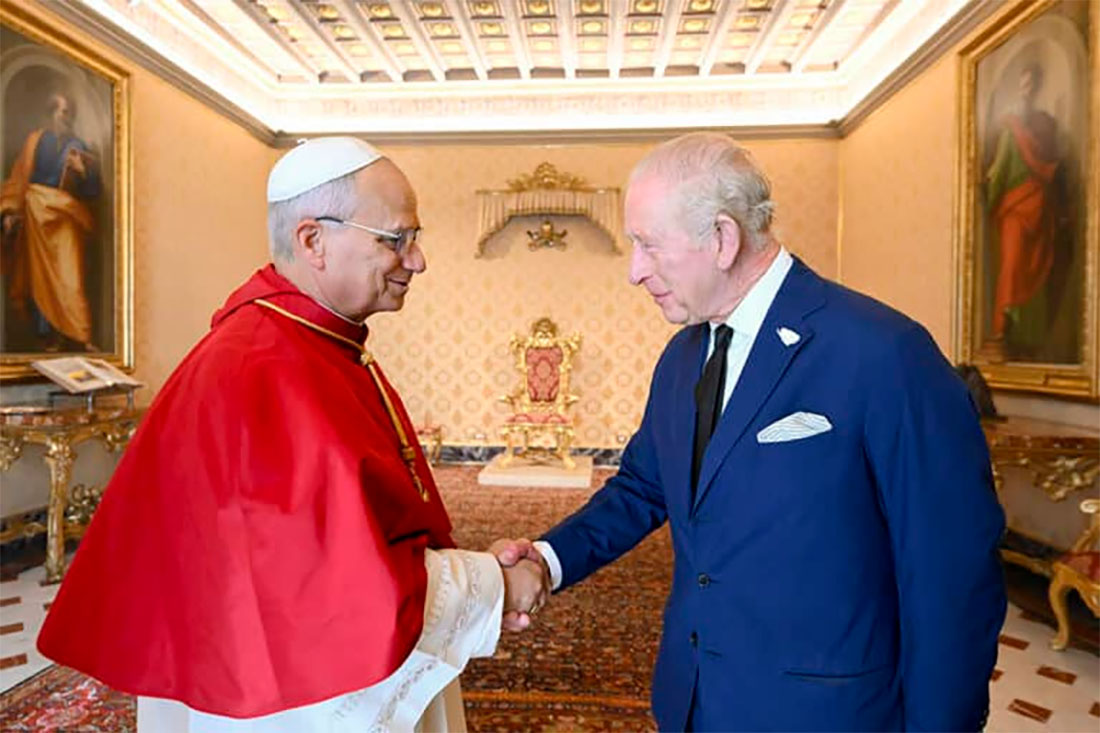
Photo Credit: Getty Images
In a moment that seemed to bridge centuries of division, Britain's King Charles and Pope Leo prayed together inside the Vatican's Sistine Chapel on Thursday, marking the first joint worship between an English monarch and a Catholic pontiff since King Henry VIII's dramatic split from Rome in 1534. The air was filled with solemn beauty as Latin chants intertwined with English prayers beneath Michelangelo's breathtaking frescoes of the Last Judgment. Charles, the supreme governor of the Church of England, sat to Pope Leo's left as the two leaders led worship accompanied by the Sistine Chapel Choir and two royal choirs.
This powerful encounter was not just symbolic but deeply historical, a gesture of healing after five centuries of religious turbulence. The King's visit, alongside Queen Camilla, was described by Reverend James Hawkey of Westminster Abbey as "a kind of healing of history," something that "would have been impossible just a generation ago." It represented how far the Anglican and Catholic Churches have come since their dialogue began in the 1960s. The Church of England, now comprising 46 autonomous churches across 165 countries, and the Catholic Church with its 1.4 billion members, have seen unprecedented cooperation despite doctrinal differences.
King Charles also had a private meeting with Pope Leo, the first American pope, before being honored later at Rome's Basilica of St. Paul Outside the Walls. There, the King was given the title "Royal Confrater" and a special seat reserved for future British monarchs, adorned with his coat of arms and the motto Ut unum sint ("That they may be one"). In return, the King conferred on Pope Leo two royal honors: the title "Papal Confrater" of St. George's Chapel, Windsor Castle, and the Knight Grand Cross of the Order of the Bath.
For many, the image of Charles praying beside the Pope beneath Michelangelo's ceiling is one for the history books, a powerful visual of reconciliation and progress between two faiths once torn apart. It signals not just a new chapter in interfaith unity, but perhaps a long-awaited closing of one of Europe's most famous theological wounds.