

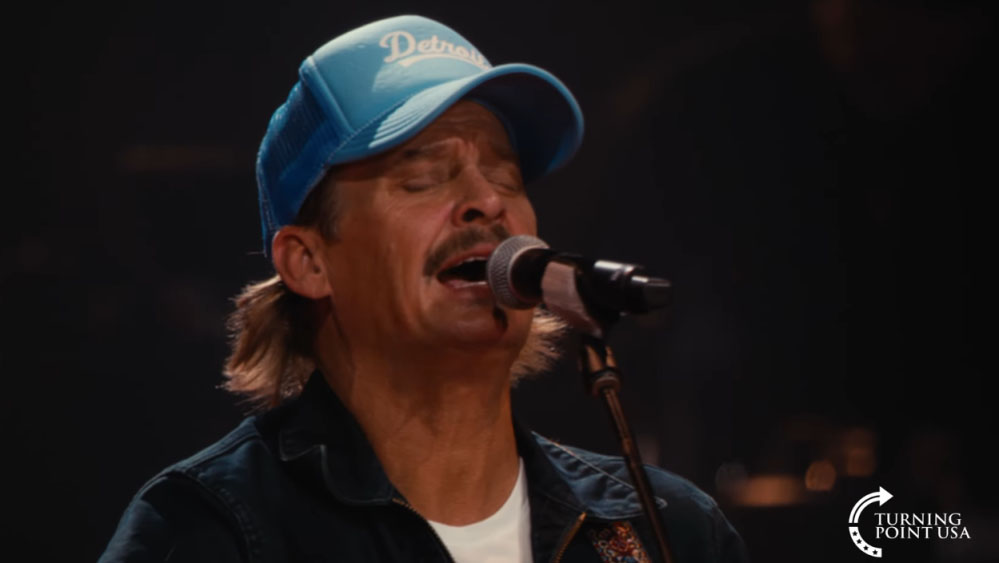
Photo Credit; Getty Images
In a candid follow-up to his performance at Turning Point USA’s “All-American Halftime Show,” Kid Rock addressed the public reaction and the viral rumors surrounding his set during an appearance on TMZ. The musician, who headlined the alternative broadcast as a counter-programming effort to the official Super Bowl LX halftime show, spoke openly about the spiritual and technical elements of the event. He framed the performance as a necessary response to a mainstream culture that he believes often overlooks the values of a significant portion of the American audience, emphasizing that the show was built on a foundation of patriotism and faith.
Addressing the setlist, Rock spoke about his decision to cover Cody Johnson’s hit “’Til You Can’t,” revealing to TMZ that he felt a spiritual pull to modify the track. He explained that he added a new, faith-driven verse after a moment of clarity on a Sunday morning, feeling a responsibility to urge listeners to return to the Bible and focus on redemption. He expressed deep gratitude to Johnson for allowing him the creative freedom to adapt the song, noting that the message of the track felt particularly resonant given the cultural climate of 2026.
However, the conversation quickly turned to the technical backlash that surfaced online. Following the broadcast, many viewers took to social media to accuse the rocker of lip-syncing, pointing out significant delays between his lip movements and the audio. Speaking with his signature bluntness on TMZ, Rock admitted that while the performance was pre-recorded, the “faked” appearance was actually the result of a massive post-production failure. He explained that he had warned the production crew that the audio and video sync was off before it aired, but the “major tech hiccup” was never corrected, leading to the awkward visual that fueled the controversy.
Despite the technical glitches, Rock remained steadfast in his support for the event, which served as a tribute to the late Turning Point USA founder Charlie Kirk. He told TMZ that the objective was never about “hate” toward mainstream artists, but rather about providing “good music for people who love Jesus and America.” By bypassing the traditional NFL stage, Rock argued that he and fellow performers like Brantley Gilbert and Gabby Barrett were able to connect with an audience that felt alienated by the league’s entertainment choices, ultimately viewing the high viewership numbers as a validation of their alternative approach.