

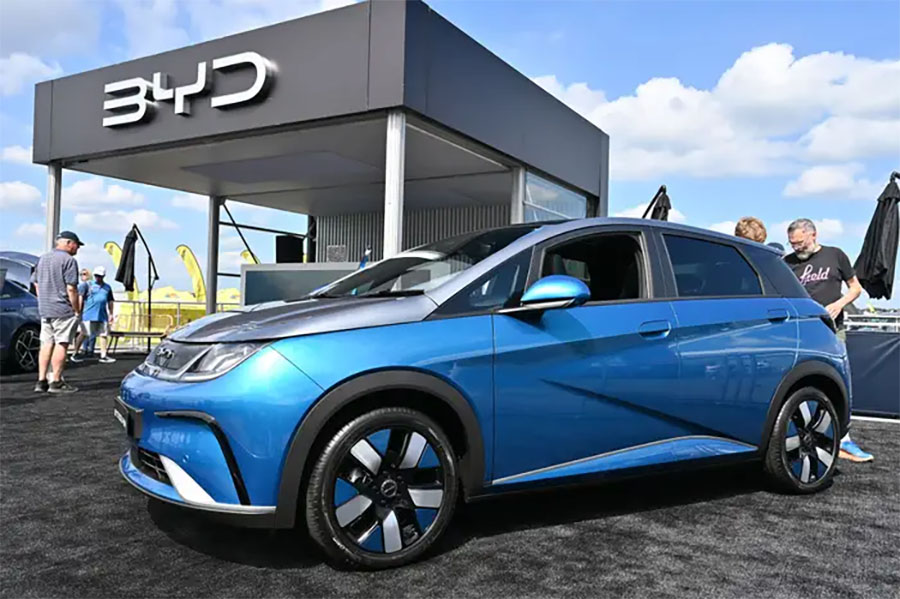
Photo Credit: Getty Images
Chinese electric vehicle maker BYD saw its shares drop by up to 8% on Monday following the release of disappointing quarterly results. The company reported a 30% year-on-year decline in net profit for the second quarter, falling to 6.4 billion yuan ($900 million; £660 million). BYD attributed the profit drop to a price war affecting China’s EV sector, stating in its filing that “increased price competition” among domestic brands has pressured margins.
The Shenzhen-based manufacturer is facing an increasingly crowded market, competing against local rivals Nio and XPeng and US carmaker Tesla, which have all slashed prices to draw buyers.
The carmaker's stock fell at the open in Hong Kong on Monday but recovered slightly throughout the day.
Competition in China's car sector has reached a "fever pitch", said BYD in its statement.
It said "industry malpractices…like, excessive marketing" played a part in disrupting the market.
EV makers have subsidised car dealers and offered zero-interest loans to buyers as the industry becomes increasingly cutthroat. It has prompted warnings from Beijing, which urged automakers to stop the aggressive discounts in order to protect the economy.
Average car prices in China have fallen by around 19% over the past two years, currently standing at around 165,000 yuan ($23,100; £17,100), according to industry estimates.
And despite significant sales abroad, BYD's earnings fell short of analysts' estimates for a modest increase. The company targeted global sales of 5.5 million cars this year, but had sold just 2.49 million by the end of July.
BYD has grown to become the world's largest EV maker, surpassing Tesla in annual revenue in 2024, thanks to the wide appeal of its hybrid vehicles in China, Asia and European markets.
Beijing's push to end the EV price war is tough, as past policies have led to too many players in the sector. Price cuts may benefit consumers, but they risk creating an oversupply of Chinese EVs in the long run.






