

Photo Credit: Getty Images
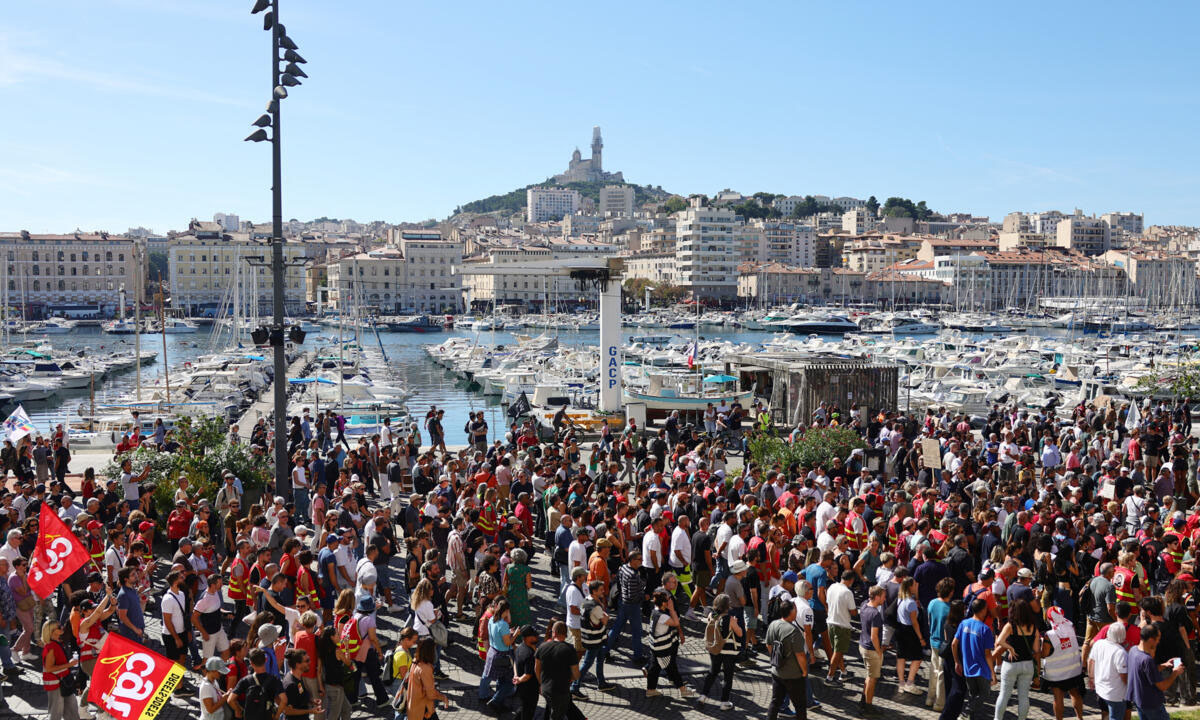
France witnessed another day of turmoil as hundreds of thousands of workers across the country took to the streets in protest against sweeping budget cuts. Organisers claimed turnout reached one million, although the interior ministry estimated the number at half a million, prompting a deployment of 80,000 police officers nationwide. The unrest comes just a week after Prime Minister Sébastien Lecornu took office following the collapse of François Bayrou's government.
Demonstrations spread across major cities, with Lyon, Nantes and Paris at the epicentre. Clashes between protesters and police were reported in the capital, where riot squads resorted to tear gas and shields after demonstrators damaged property. More than 300 people were detained, and public transport was severely disrupted as metro lines shut down and roads were blocked. Students joined the movement, sealing off school entrances, while about a third of teachers walked out. Pharmacies were also closed, with 98 percent participating in the strike.
The protesters' demands included halting the controversial budget cuts, increasing taxes on the wealthy and investing more in public services.
Lecornu faces the same obstacle that toppled his predecessors: a hung parliament divided into competing blocs, and a ballooning public debt of $47 billion. The unpopular cuts introduced under Bayrou triggered a no-confidence vote, uniting opposition parties to oust him. Now Lecornu must walk a fragile line, courting support from across the aisle to stabilise his government.
Yet as France's debt grows to nearly $53,000 per citizen, the balance between fiscal discipline and public anger becomes more precarious. The strikes, swelling in both size and intensity, suggest that any attempt at austerity will be met with fierce resistance.