

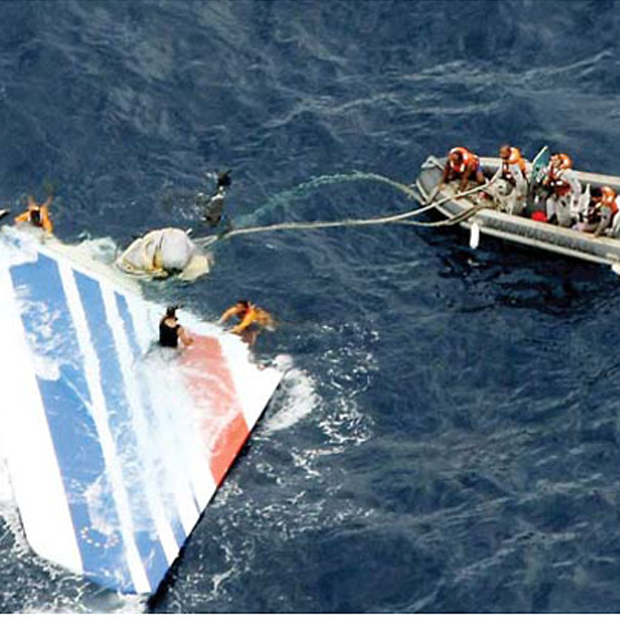
Photo Credit: Getty Images
Nearly seventeen years after the tragic crash of Air France Flight AF447, a Paris Appeals Court has found both Air France and Airbus guilty of manslaughter over the disaster that claimed the lives of 228 people. The ruling marks a major turning point in one of the deadliest aviation disasters in French history and comes after years of legal battles, investigations, and demands for accountability from grieving families.
Flight AF447 was travelling from Rio de Janeiro to Paris on 1 June 2009 when the aircraft crashed into the Atlantic Ocean during a storm. All 216 passengers and 12 crew members on board were killed after the aircraft stalled and plunged into the sea from an altitude of 38,000 feet.
The Paris Appeals Court ruled that the airline and aircraft manufacturer were “solely and entirely responsible” for the crash. This decision overturned an earlier ruling made in April 2023 that had cleared both companies of criminal responsibility. The latest verdict followed an eight week trial during which prosecutors strongly criticised the conduct of the two companies, describing their behaviour as “unacceptable.”
Both Air France and Airbus have continued to deny the charges and are expected to appeal the ruling. The court has requested the maximum fine of €225,000 for each company, although several victims’ families described the amount as symbolic and insufficient considering the scale of the tragedy.
Family members of the victims gathered in court to hear the decision, many of them having spent years searching for justice. Daniele Lamy, president of the AF447 victims’ association, welcomed the ruling and said the court had finally recognised “the pain of the families faced with a collective tragedy of unbearable brutality.” Lamy lost her son in the crash.
The disaster led to one of the most difficult and expensive recovery operations in aviation history. The aircraft disappeared over a remote part of the Atlantic Ocean more than 700 miles from the South American coast. The wreckage was eventually located after extensive searches covering nearly 10,000 square kilometres of ocean floor. However, the aircraft’s flight recorder was not recovered until 2011 after months of deep sea operations.
In the first 26 days of the search mission, only 51 bodies were recovered, many of them still strapped into their seats. Some families waited years before they could properly bury their loved ones. One relative told BBC News Brasil in 2019 that he only managed to bury his son’s remains more than two years after the accident.
The passengers onboard came from 33 countries, with most being French, Brazilian, and German nationals. Among those killed were doctors from Ireland, British child Alexander Bjoroy from Bristol, and Brazilian prince Pedro Luiz de Orleans e Bragança.
Investigators later concluded in 2012 that the crash was caused by a combination of technical failure and pilot error. Faulty air speed sensors reportedly confused the pilots during severe weather conditions. Instead of lowering the aircraft’s nose during the stall, the pilots mistakenly raised it, causing the aircraft to lose control and crash into the ocean.
Following the tragedy, aviation authorities introduced improvements in pilot training and replaced the faulty speed sensors linked to the accident. The ruling now closes another important chapter in a case that has haunted the aviation industry and the victims’ families for more than a decade.






