

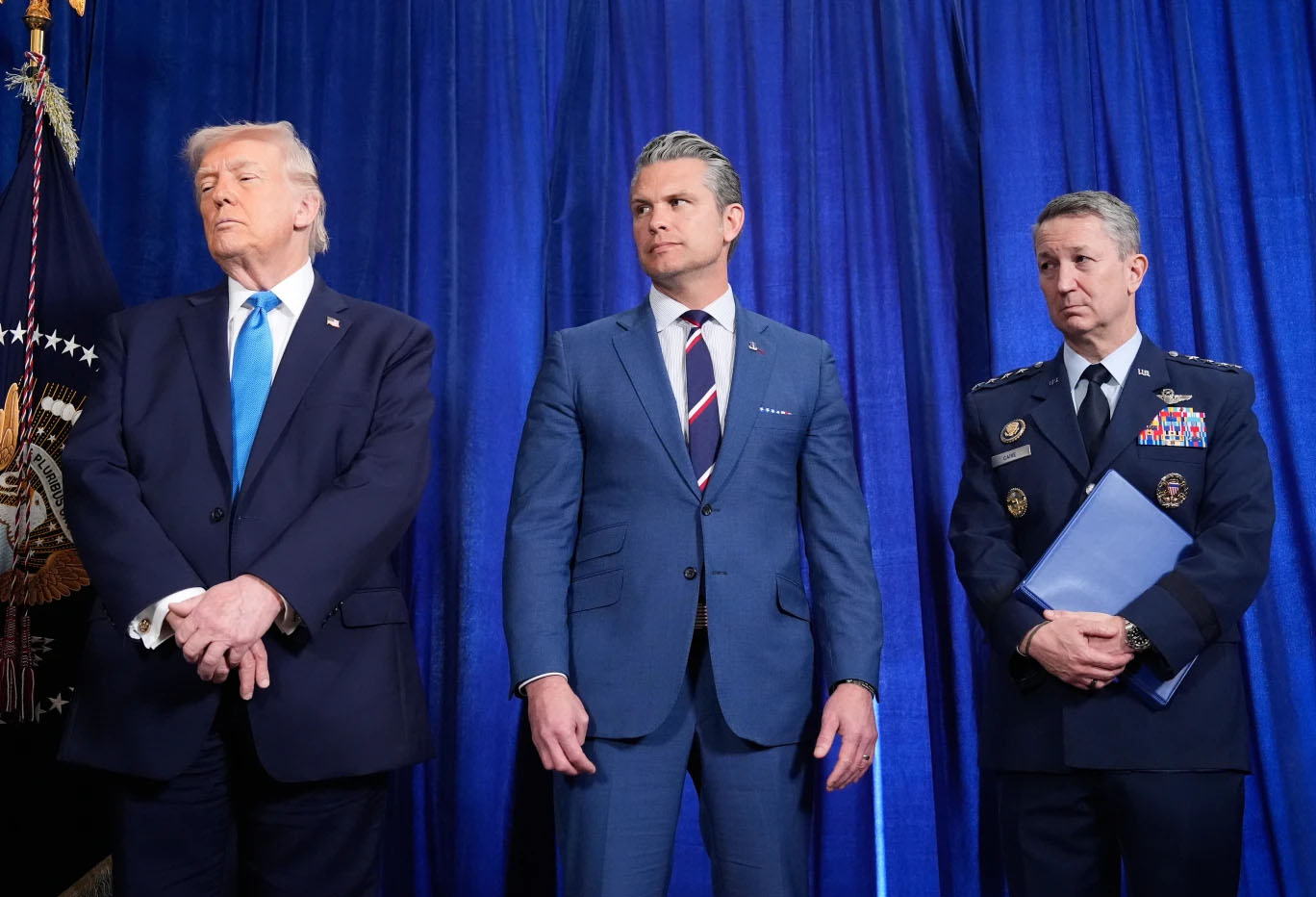
Photo Credit: Getty Images
The Trump administration’s capture of Venezuela’s president and plans to “run” the country are raising stark new questions about the legality of the U.S. moves under a broader campaign against the South American nation.
The middle-of-the-night seizure of Nicolás Maduro, who was being transported on a U.S. warship to face narcoterrorism conspiracy charges in New York, is beyond even the most high-profile historical examples of aggressive American actions toward autocratic governments in Panama, Iraq and beyond, legal experts said. It came after a surprise U.S. incursion into the Venezuelan capital, rocked with overnight explosions.
“This is clearly a blatant, illegal and criminal act,” said Jimmy Gurule, a Notre Dame Law School professor and former assistant U.S. attorney.
Mark Nevitt, a former Navy attorney who now teaches at Emory University School of Law, said, “I see no legal basis for us to go into another country and take a leader without an extradition treaty.”
The stunning development caps months of aggressive U.S. military action in the region, including the bombings of boats accused of trafficking drugs and seizures of oil tankers off the coast of Venezuela. The administration has conducted 35 known boat strikes against vessels, killing more than 115 people since September.
Michael Schmitt, a former Air Force lawyer and professor emeritus at the U.S. Naval War College, said the entire operation — the boat strikes as well as the apprehension of Maduro — are a clear violation of international law.
Maduro’s arrest on anniversary of Noriega’s surrender
Maduro’s arrest came 36 years to the date of the surrender of Panama’s strongman Manuel Noriega, a notable milestone in American involvement in the Western Hemisphere. The U.S. invaded Panama in 1989 to arrest Noriega on drug trafficking charges.
In Panama, however, U.S. national security interests were directly at stake in the form of the Panama Canal as well as the safety of American citizens and U.S. military installations in the country.
By contrast, Congress has not authorized any American military strike or law enforcement move against Venezuela.
While U.S. agents have a long history of snatching defendants abroad to execute arrest warrants without authorization, federal courts have long deferred to the White House in foreign policy and national security matters.
For example, U.S. bounty hunters, working under the direction of the Drug Enforcement Administration, in 1990 abducted in Mexico a doctor accused of killing DEA agent Enrique “Kiki” Camarena.
“Courts give great deference to the president on issues related to national security,” said Gurule, who led the prosecution against Camarena’s killers. “But great deference does not mean absolute deference and unfettered authority to do anything.”






