

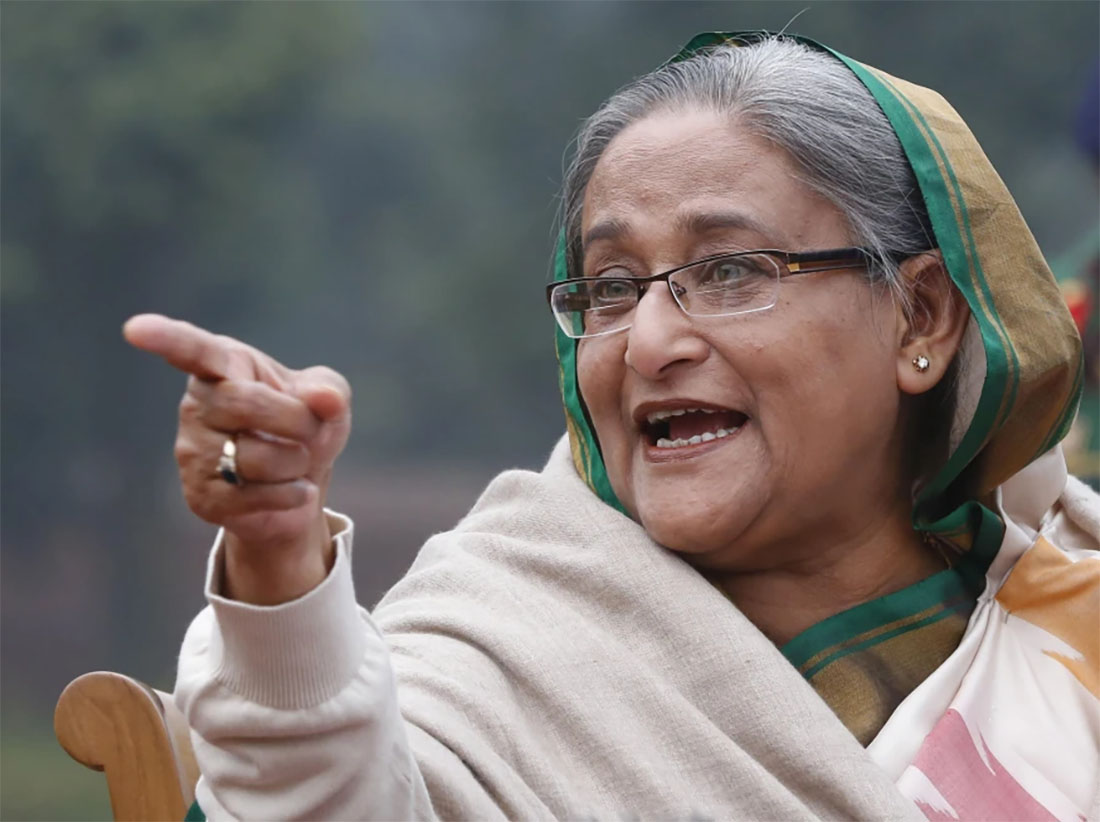
Photo Credit: Getty Images
India's long-standing partnership with Sheikh Hasina has entered its most fragile chapter yet as the former Bangladeshi leader remains in exile across the border after being sentenced to death by a special tribunal. For fifteen years she provided New Delhi with what it values most in its immediate region: political stability, counterbalance to Chinese influence and critical access for India's northeastern connectivity. Her abrupt fall from power during the 2024 student-led uprising and the rise of Nobel laureate Muhammad Yunus as interim leader have now left India navigating a diplomatic crisis without easy answers.
Dhaka has formally sought Hasina's extradition, but India has shown no willingness to comply, rendering the sentence unenforceable. What New Delhi viewed as a humanitarian refuge has evolved into a test of political loyalty and strategic restraint. Analysts observe that India now faces four undesirable choices: surrendering Hasina, preserving the status quo, pressuring her into silence or relocating her to a third country. Each path carries political risk, especially as Bangladesh's interim government signals a shift away from India's orbit.
Bangladesh has begun reassessing its foreign alignments, cooling cooperation on Indian energy projects, delaying connectivity initiatives and strengthening relationships with China, Pakistan and Turkey. Public opinion has also shifted dramatically. A recent Dhaka survey indicated strong favourability toward China and a sharply diminished perception of India, reflecting resentment over the belief that New Delhi supported Hasina as she grew increasingly authoritarian.
Yet economic interdependence complicates any abrupt break. India remains Bangladesh's largest export market in Asia and its biggest South Asian trading partner, with bilateral trade reaching nearly $13 billion last year. Shared water resources, energy links, border security and transit routes bind the two nations in ways that transcend political cycles. Analysts argue that even strained political ties have historically not undermined trade or cultural relations.
The coming year is expected to be volatile as Bangladesh heads toward elections. India must balance loyalty to an embattled ally with the practical need to maintain influence in a country central to its regional security. Observers note that the future of bilateral relations may hinge on whether the next Bangladeshi government allows the Hasina issue to dominate diplomacy. India's challenge is to remain a reliable partner while avoiding the perception that it shields leaders accused of human rights violations. What emerges is a moment of reckoning for Indian foreign policy as it weighs pragmatism, loyalty and long-term regional stability.