

Photo Credit: Getty Images
Despite what some anime commentators argue, One Piece has always been political. Its pages and episodes are soaked in stories of power, resistance, and rebellion. So it shouldn’t shock anyone that the Straw Hat Pirates’ jolly roger has crossed over from fiction into reality—emerging as a striking emblem in youth-led political protests across the globe.
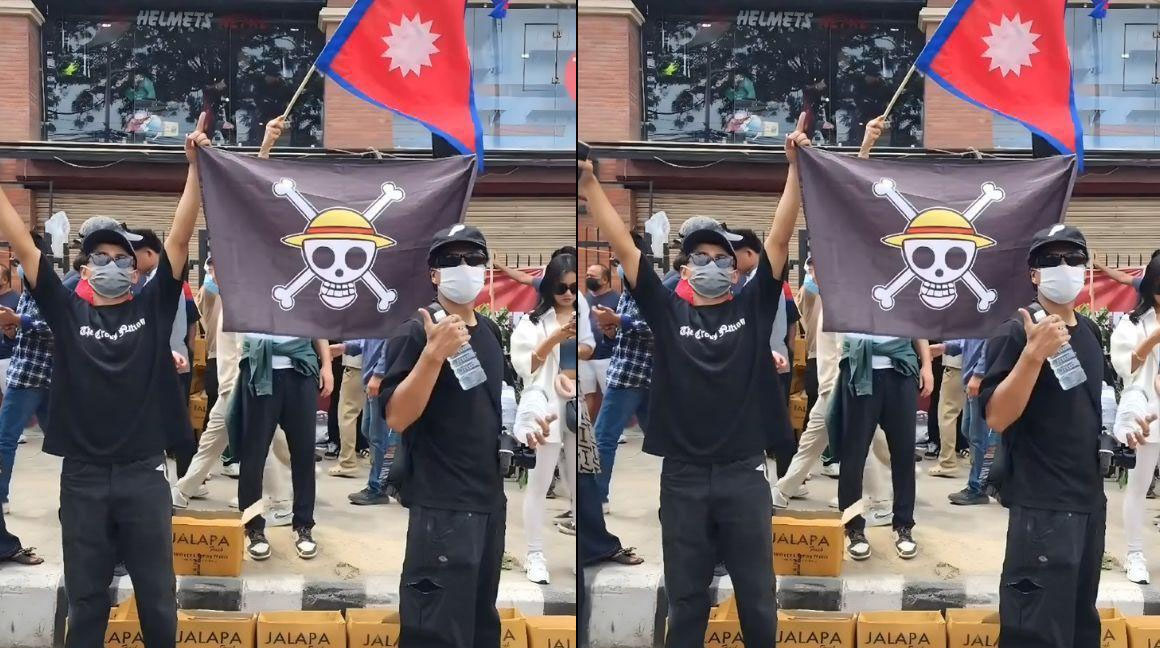
The first sighting of the Straw Hats’ skull-and-crossbones flag came this summer in Indonesia, where protesters waved it in defiance of President Prabowo Subianto’s call for citizens to publicly display the national flag. What might have seemed like a niche pop culture statement quickly escalated into something bigger. By early September, the same symbol appeared again—this time in Nepal—where Gen-Z demonstrators transformed it into a banner of revolution.
Nepal’s protests erupted on September 8, triggered by a nationwide social media ban imposed just days earlier. What began as digital frustration turned into a sweeping demand for accountability, transparency, and an end to systemic corruption. The protests grew massive and unrelenting, ultimately forcing the resignation of Prime Minister KP Sharma Oli. In an unprecedented twist, his successor was chosen via a Discord election: Sushali Karki, the country’s first female prime minister.
But the victory came at a terrible cost. Police deployed live ammunition against protesters, and reports confirmed at least 72 deaths during the clashes. Even amid tragedy, images spread across social media showing young activists raising the Straw Hat flag high above the chaos. For them, the jolly roger wasn’t cosplay—it was canon, a fictional emblem repurposed into a living symbol of defiance.
The imagery didn’t stop in Nepal or Indonesia. The same flag has since been spotted in French demonstrations against austerity measures, and in Peru, where protesters in Lima raised it as a declaration of dissatisfaction with their government. The Straw Hats’ pirate symbol has become shorthand for resistance, solidarity, and a refusal to bow to corrupt authority.
Why this flag, and why now? Because One Piece itself is about rebellion. While most pirate crews in the story are selfish marauders, Luffy and his allies stumble into political upheaval wherever they go. They don’t just chase treasure—they liberate islands, fight authoritarian rulers, and expose systemic abuses. Across the series, the crew confronts propaganda, slavery, racism, war crimes, and religious extremism. Beneath the humor and fantastical battles lies a narrative of collective struggle against tyranny.
For fans, the Straw Hat jolly roger represents more than a band of misfit adventurers. It symbolizes a found family that stands against oppression, queer-coded heroes who fight fascists head-on, and the idea that laughter and resistance can coexist even in the darkest moments.
So when protesters in Nepal, Indonesia, France, and Peru hoist the Straw Hat flag, they aren’t blurring fiction with reality. They’re carrying forward its spirit. In those streets, the jolly roger isn’t just an anime logo—it’s a declaration: that ordinary people, armed with courage and solidarity, can topple the powers that be.