

Photo Credit: Getty Images
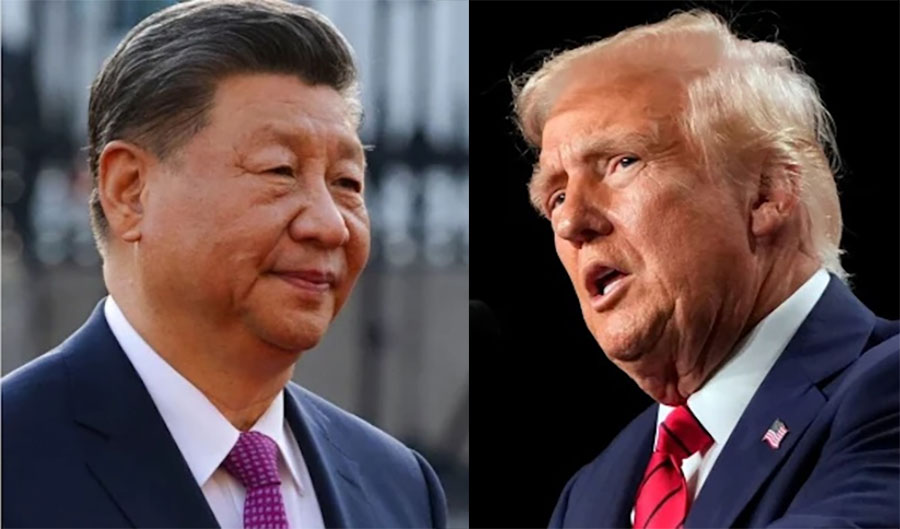
President Donald Trump has threatened Beijing with tariffs of up to 200% if China restricts shipments of rare-earth magnets to the United States, reigniting trade tensions just weeks after both sides agreed to extend a fragile truce.
Speaking at the White House on Monday alongside South Korean President Lee Jae Myung, Trump insisted that Washington still sought "a great relationship" with Beijing but warned he was willing to use America's leverage if China weaponized its dominance in rare earths.
"They have to give us magnets," Trump said bluntly. "If they don't, we have to charge them 200% tariffs or something. We have incredible cards. If I play those cards, it would destroy China. I'm not going to do that, but I could."
Rare-earth magnets are critical for U.S. industries ranging from electric vehicles to defense systems, and China controls nearly 90% of global supply. Earlier this year, Beijing briefly curtailed exports as part of its retaliation strategy, before loosening restrictions under the trade truce. July shipments to the U.S. reached their highest level in six months, according to customs data.
Trump pointed to aviation as another key bargaining chip, noting that China had "200 planes grounded" until he authorized the release of Boeing parts. "I could have held them back, but I didn't, because of the relationship I have. And now they're flying," he said.
The president also suggested the U.S. is making strides in building its own supply chain. "We could have the magnets in about a year," he claimed, though he provided no further detail.
Earlier this month, Trump signed an executive order adjusting reciprocal tariff rates with China under emergency economic powers, continuing a series of trade-related orders that began in April. While the current pause in fresh tariffs is scheduled to expire November 10, both sides are expected to hold further talks before then.
Analysts say Trump's threat may be more political theater than policy. "He's bluffing," said Henry Wang, president of the Center for China & Globalization in Beijing. "He talks tough, but the real test is whether both countries can actually implement their agreements."