

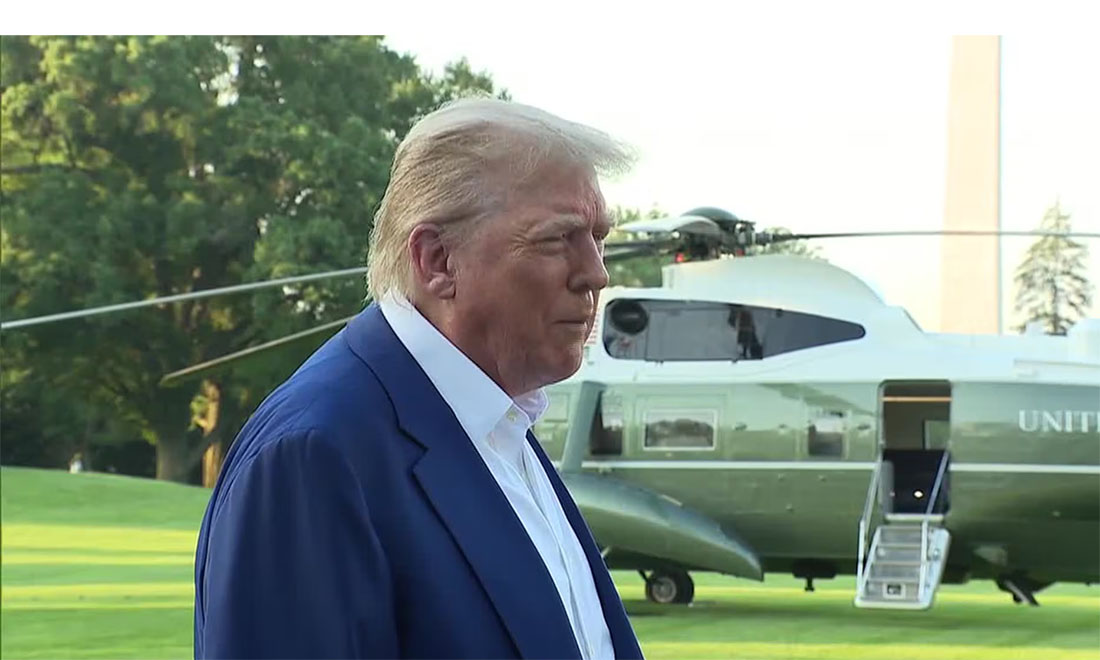
Photo Credit: Getty Images
Donald Trump's renewed threat to impose tariffs on Chinese-made semiconductors has reignited fears across the global tech industry. The former U.S. president, now a leading Republican candidate for the 2024 election, suggested a 60% levy on chips imported from China, a move that could reshape supply chains and hit several industry giants, including South Korea's Samsung Electronics.
Samsung, which manufactures a large volume of chips in China, finds itself in an increasingly precarious position. While it's a South Korean firm, a significant portion of its NAND flash memory production occurs in Xi'an, China. Any sweeping U.S. tariffs on Chinese-origin tech could affect Samsung's ability to supply to American clients, potentially reducing its competitiveness in the U.S. market.
The U.S. is one of Samsung's largest customers for memory chips, and any disruption could also affect companies that rely on its components, from smartphone makers to cloud computing firms. Samsung has made previous efforts to diversify manufacturing outside China, including new investments in Texas, but such projects are years from full-scale output. In the short term, vulnerability remains.
At the core of Trump's argument is reducing dependence on China in strategic sectors. Semiconductors, which power everything from iPhones to fighter jets, have become central to national security discussions. Trump's rhetoric reflects a broader Washington sentiment: that the U.S. must protect its tech base from geopolitical rivals, regardless of cost.
The move also signals a likely shift in U.S. trade policy should Trump return to office. His administration previously imposed tariffs on Chinese goods, sparking a years-long trade war. While President Joe Biden has maintained some of those measures, Trump's proposed escalation targets a far more critical sector this time.
Other chipmakers with Chinese exposure, including SK Hynix and Micron, are watching closely. Investors have already shown signs of concern, with Samsung's shares dipping after Trump's comments. Meanwhile, Chinese firms may respond by tightening access to rare earth minerals or escalating tensions in their own way.