

Photo Credit: Getty Images
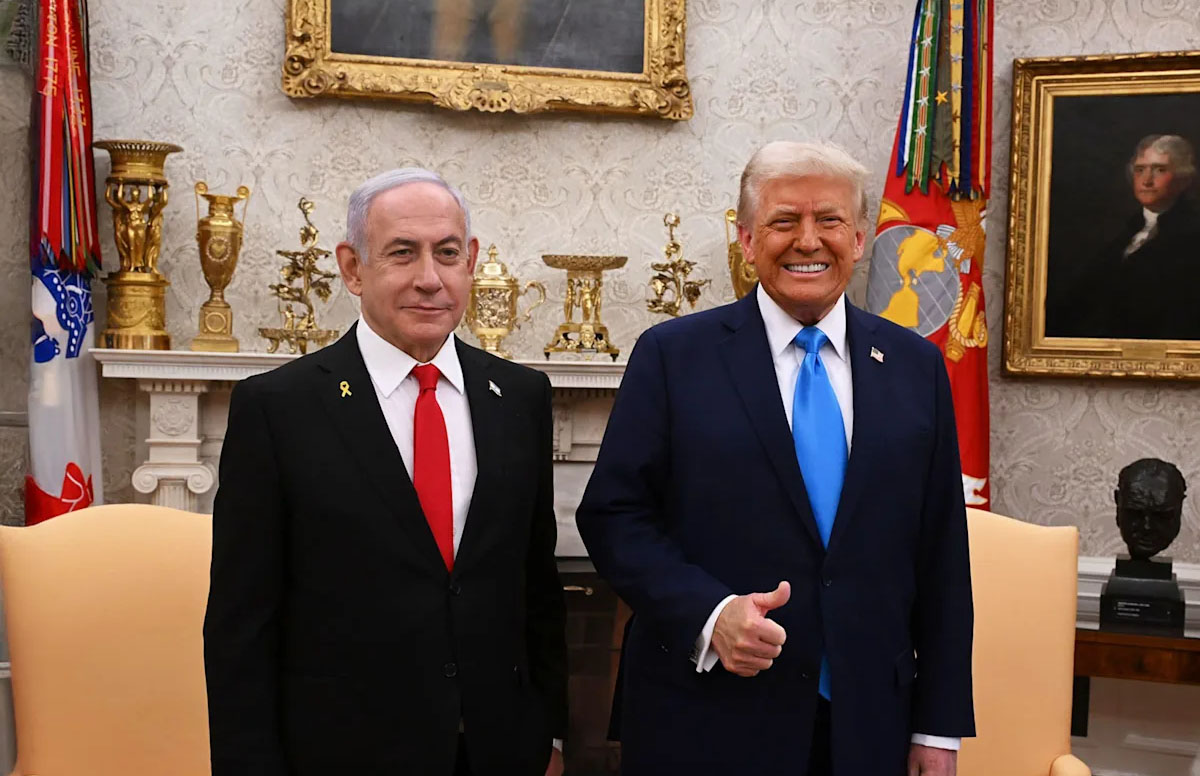
Israeli Prime Minister Benjamin Netanyahu met with U.S. President Donald Trump at the White House on Monday to discuss the long-delayed Gaza ceasefire and potential regional realignment. This high-stakes meeting came as Israeli negotiators continued indirect talks with Hamas in Doha, Qatar, seeking a resolution to the nearly two-year conflict.
Netanyahu's Washington visit, his third under Trump's current term, comes at a pivotal time. According to U.N. estimates, over 57,000 Palestinians have been killed since Israel launched retaliatory operations in Gaza following Hamas' October 2023 attack, which left 1,200 Israelis dead and 251 taken hostage. With more than half a million Gazans now facing famine, U.S. officials have accelerated diplomatic efforts to finalize a ceasefire and hostage-release agreement.
During their private dinner at the White House Blue Room, Trump reaffirmed his commitment to supporting Israel while hinting at diplomatic flexibility. "We've scheduled Iran talks. They want to talk," Trump said, referencing Iran's support of Hamas. "They took a big drubbing," he added, referring to the recent Israeli-U.S. coordinated airstrikes on Iranian targets. Trump's envoy, Steve Witkoff, confirmed negotiations with Iran would begin "in the next week or so."
Netanyahu, meanwhile, floated a controversial proposal to relocate willing Gazans to neighboring countries. "If people want to stay, they can stay, but if they want to leave, they should be able to," he said. Trump echoed this sentiment, emphasizing regional cooperation: "We've had great cooperation from every single one of the surrounding countries."
However, this plan was met with widespread condemnation. Human rights organizations denounced it as ethnic cleansing, and Gazan residents vowed to remain. Outside the White House, hundreds of protesters, many donning keffiyehs, demanded an end to U.S. military aid to Israel and called for Netanyahu's arrest, citing the International Criminal Court's warrant for alleged war crimes.
Meanwhile, negotiators in Doha faced continued obstacles. According to Palestinian sources, Israel's restrictions on humanitarian aid remain a core sticking point. The current proposal includes a phased Israeli withdrawal and hostage release but is snagged on mutual distrust—Israel demands Hamas' dismantling, while Hamas insists on a full end to hostilities.
Still, Trump remains publicly optimistic. "Something good will happen," he stated. As fatigue deepens in Israel and desperation escalates in Gaza, whether this latest diplomatic push bears fruit may determine the region's near-term stability, and the legacy of both leaders.