

Photo Credit: Getty Images
Gunfire was still echoing across Khan Younis on Saturday when two American aid workers collapsed, bleeding, beside pallets of wheat flour. The Gaza Humanitarian Foundation (GHF) , a U.S‑ and Israeli‑backed charity created in May to bypass Hamas control of supplies, says "two assailants threw grenades at our personnel moments after the last family collected food." Both workers remain in stable condition.
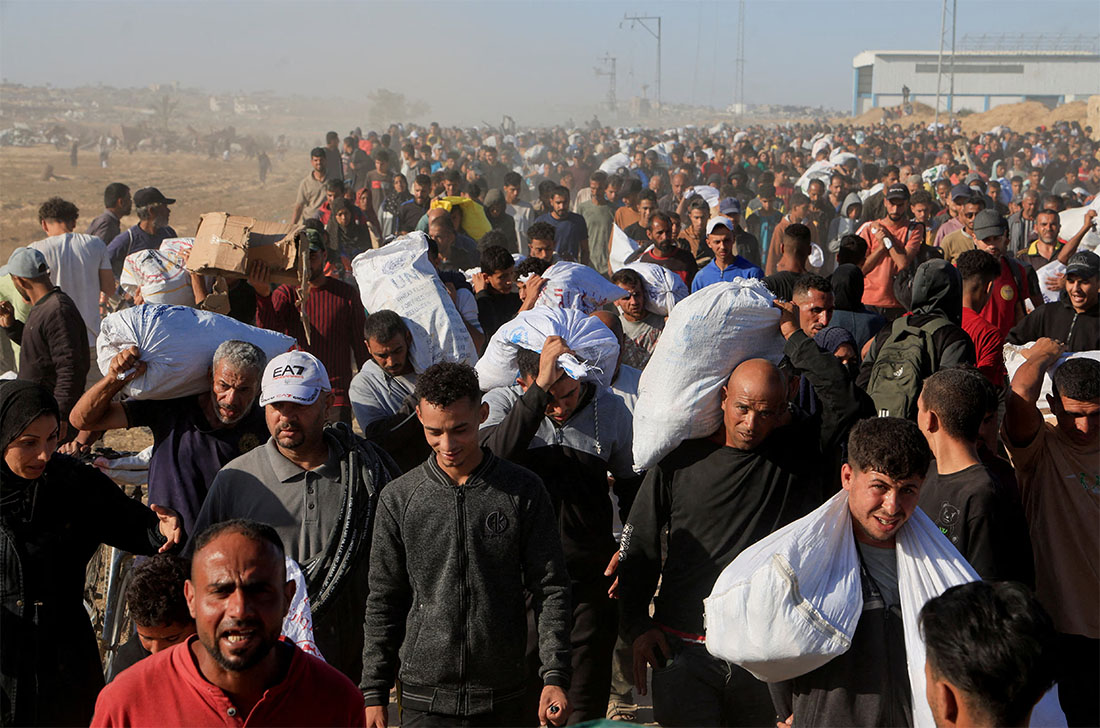
The strike highlights the deadly tension surrounding Gaza's new aid lanes. United Nations monitors record more than 400 Palestinian deaths near distribution points since 19 May, the day Israel lifted an 11‑week blockade and GHF's armoured trucks began rolling. A senior UN official warned last week, "People are being shot while running for bread; the system is neither impartial nor safe."
Saturday's attack came hours after Hamas signalled readiness to reopen ceasefire talks mediated by Washington. The group wants GHF disbanded and aid routed through UN agencies. It insists any truce must include a U.S. guarantee that hostilities will not restart once an initial pause lapses.
Israel rejects that demand. In a brief statement the Israel Defense Forces blamed unnamed "terrorist organisations" for "sabotaging humanitarian relief," and claimed troops killed 100 militants during the past week while achieving "operational control over 65 percent of Gaza." Gaza's civil‑defence agency counters that 70 civilians were killed in the previous 24 hours, including 23 near aid depots.
Numbers underscore the humanitarian abyss. Gaza's health ministry puts the overall Palestinian death toll at 57,338 since Israel's campaign began in response to the 7 October 2023 Hamas raid that left about 1,200 Israelis dead and 251 abducted. Hunger is now rampant: GHF says it has handed out 52 million meals in five weeks, yet residents still trek through active combat zones for every ration.
Inside a Khan Younis clinic, volunteer doctor Samira Abu‑Shaaban treated the wounded Americans. "Their protective vests saved their lives," she told reporters. "Gazans aren't that lucky. We lack helmets, we lack medicine, and every pickup carries the risk of sniper fire."
Diplomats hope the incident will jolt negotiators. Hamas said on Friday it had delivered "a positive response" to a U.S. framework involving staggered hostage‑for‑prisoner exchanges. Fifty Israeli captives remain in Gaza; at least twenty are believed alive. President Donald Trump is expected to discuss the plan with Prime Minister Benjamin Netanyahu in Jerusalem on Monday.
For exhausted Gazans, however, ceasefire drafts and press releases change little. Until warring parties agree on a protected, neutral aid corridor, the simple act of feeding families will stay a daily gamble measured in shrapnel wounds and body counts in the rubble‑choked coastal strip.