

Photo Credit: Getty Images
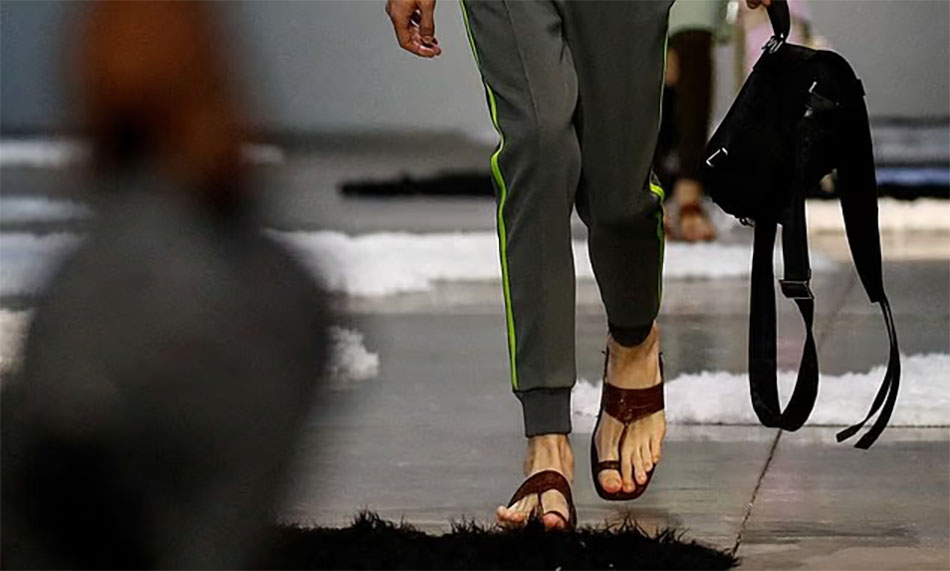
Italian fashion house Prada has acknowledged the Indian origins of its new footwear line following a controversy in India. The sandals, which were showcased at Milan Fashion Week last week, feature an open-toe braided design closely resembling traditional Kolhapuri sandals from the Indian states of Maharashtra and Karnataka.
Prada described the sandals as "leather footwear" but did not mention its Indian origins, prompting backlash and allegations of cultural appropriation in India.
Responding to the controversy, Prada told reporters in a statement that it recognises that the sandals are inspired by traditional Indian footwear.
A Prada spokesperson said that the company has "always celebrated craftsmanship, heritage and design traditions", adding that it was "in contact with the Maharashtra Chamber of Commerce, Industry & Agriculture on this topic". This is a prominent industry trade body in the state.
Last week, its chief had written to the brand, saying the design was commercialised without crediting the artisans who have preserved its heritage for generations.
Lorenzo Bertelli, Prada's head of Corporate Social Responsibility, responded to his letter saying that the sandals were "at an early stage of design", according to Reuters.
He also said that Prada was open to a "dialogue for meaningful exchange with local Indian artisans" and the company would organise follow-up meetings to discuss this further.
Named after a city in Maharashtra where they are made, Kolhapuri sandals trace their roots back to the 12th Century. Made from leather and sometimes dyed in natural colours, the traditional handcrafted sandals are sturdy and well-suited to India's hot climate.
They were awarded the Geographical Indication (GI) status by the Indian government in 2019.
According to the World Trade Organisation, a geographical indication tag credits a good or product as having originated from a certain region or place, and is considered a mark of authenticity.
Following the controversy, many artisans in Kolhapur said they were saddened by Prada's use of the design without giving due credit.
This is not the first time that global brands have been accused of appropriating Indian traditional products without crediting their roots.
In Kolhapur, however, some said the move had instilled a sense of pride in them.