

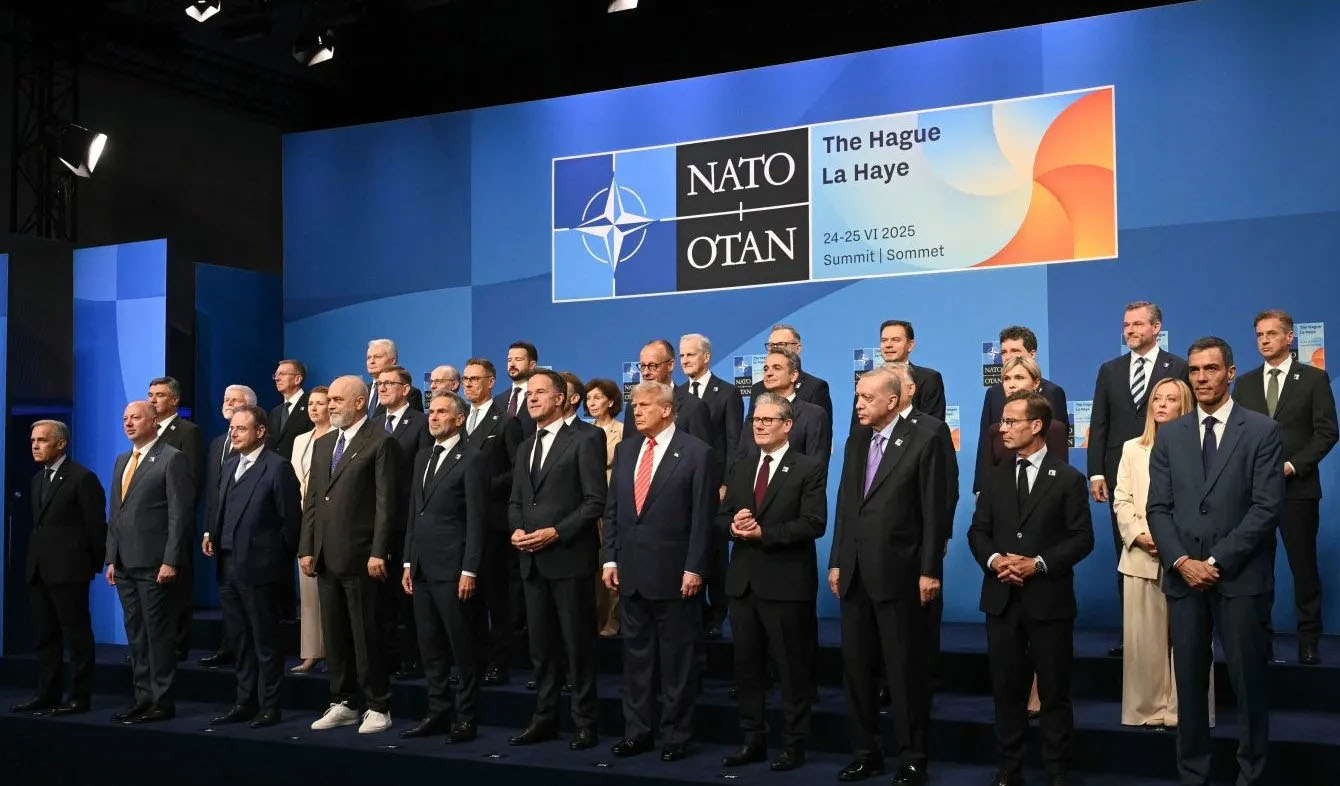
Photo Credit: Getty Images
In a significant move following President Trump's persistent calls, NATO leaders gathered in The Hague have agreed to pursue a target of allocating 5 percent of their respective economic outputs to defense. This decision marks a notable shift in NATO's financial commitments, aiming to bolster collective security in the face of escalating global threats.
President Trump's push for increased military spending dominated discussions during the annual summit. While the agreement reflects a unified stance on enhancing defense capabilities, the wording of the declaration provided some room for interpretation. Specifically, the communiqué noted that "allies" had committed to the 5 percent goal, allowing flexibility for individual member states in meeting this ambitious target.
The summit's focus on military expenditure came amidst ongoing tensions, particularly in light of Russia's aggressive actions near NATO's borders and the broader geopolitical landscape. Despite the emphasis on financial commitments, discussions surrounding NATO's support for Ukraine and the alliance's broader strategic priorities remained integral.
An unexpected twist at the summit involved the leak of a U.S. intelligence report casting doubt on claims that recent military actions had significantly crippled Iran's nuclear program. This development underscored broader uncertainties and strategic challenges facing NATO as it navigates complex global security dynamics.
Amidst the military spending pledges, individual member states expressed varying levels of commitment. Spain, for instance, affirmed its intention to meet NATO's existing defense targets without committing explicitly to the 5 percent threshold. Such nuanced positions highlight the delicate balance NATO leaders sought to strike between solidarity and national interests.
Beyond financial commitments, discussions also touched on NATO's mutual defense pact under Article 5, which ensures collective defense against any attack on member states. President Trump's reassurances on Article 5, albeit initially ambiguous, underscored the alliance's resolve to uphold its core principles amidst evolving geopolitical pressures.
NATO Secretary General Mark Rutte reaffirmed the alliance's commitment to supporting Ukraine's security efforts while emphasizing the need for sustained international cooperation in the face of shared threats. The summit's outcomes, while significant, signal a continued evolution in NATO's strategic priorities and operational dynamics moving forward.
As NATO looks towards the future, challenges such as achieving consensus on defense spending targets and maintaining unity amid geopolitical uncertainties will remain pivotal. The summit's deliberations have set the stage for ongoing strategic discussions and collective actions aimed at reinforcing NATO's role as a cornerstone of international security cooperation.
While the summit's outcomes represent a step forward in enhancing NATO's military capabilities, the road ahead will require sustained diplomatic efforts and strategic foresight to navigate an increasingly complex global security landscape.