

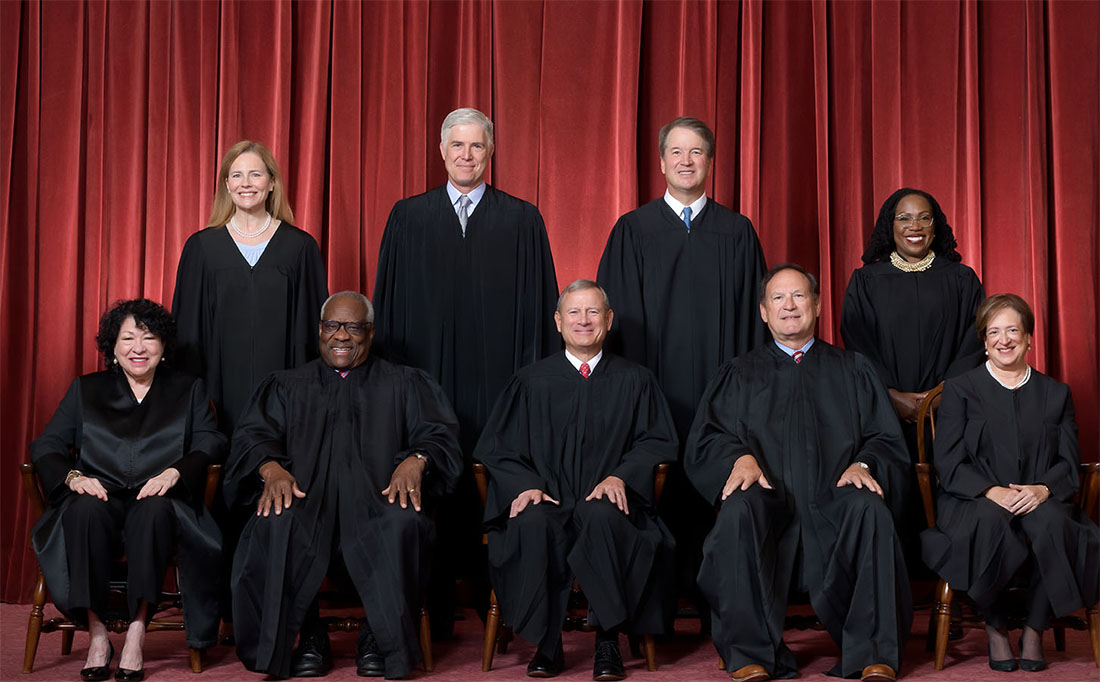
Photo Credit: Getty Images
The US Supreme Court has ruled in favor of the Trump administration, allowing it to resume deportations of migrants to countries beyond their homeland, potentially exposing them to greater risks. In a 6-3 decision, the court reversed a lower court order that would have required the government to offer migrants a "meaningful opportunity" to present evidence of potential dangers in those third countries.
The Supreme Court's three liberal justices issued a scathing dissent from the ruling in the case of eight migrants, convicted of serious crimes in the US, who were removed on a plane bound for South Sudan in May.
The decision hands the Republican president another victory in his pursuit of mass deportations.
The case involves a group of migrants from Myanmar, South Sudan, Cuba, Mexico, Laos and Vietnam, who were deported by the Trump administration two months ago on a plane heading for South Sudan.
Boston-based US District Judge Brian Murphy issued an order that the migrants must be allowed to challenge their removal to third countries.
Justices Sonia Sotomayor, Elena Kagan and Ketanji Brown Jackson criticised the majority's decision on Monday, calling it "gross abuse".
"Apparently, the court finds the idea that thousands will suffer violence in far flung locales more palatable than the remote possibility that a district court exceeded its remedial powers when it ordered the government to provide notice and process to which the plaintiffs are constitutionally and statutorily entitled," Sotomayor wrote.
"That use of discretion is as incomprehensible as it is inexcusable."
Like other cases on the Supreme Court’s emergency docket, the ruling Monday was not the final word – and it did not resolve the underlying legal questions the appeal raised. Instead, it allowed the administration to continue the policy while the legal challenge moved through the lower courts.
The court itself offered no explanation for the decision.
Trina Realmuto, executive director of the National Immigration Litigation Alliance, described the ramifications of the court’s order as “horrifying.”






