

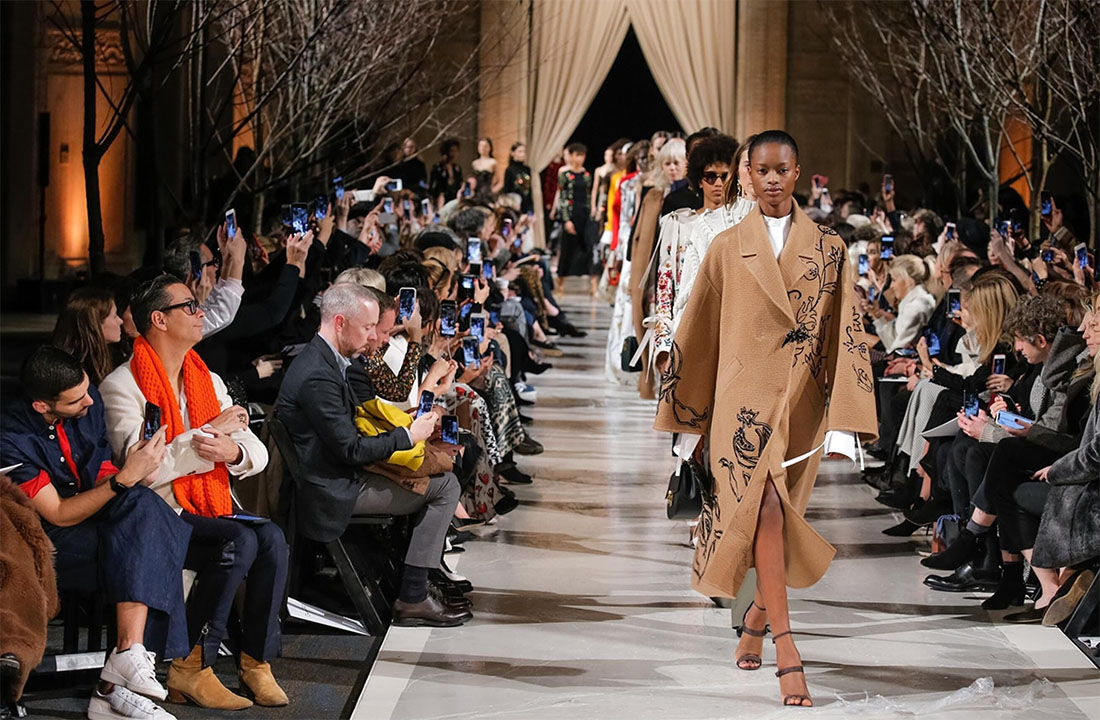
Photo Credit: Getty Images
London Fashion Week has entered a new chapter under the guidance of British Fashion Council's CEO Laura Weir, who declared in her opening speech that "fashion matters." Determined to make London "a sensational showcase of creative fashion design talent," Weir outlined her vision of reducing barriers to entry and welcoming "new energy, new thinking and new ideas" to the global stage. For the first time, members of Parliament debated whether the event was in the national interest, highlighting its growing cultural and economic relevance.
This year's schedule embodied both prestige and playfulness, with Burberry closing the week at Kensington Palace Gardens before an audience that included Elton John and Vanessa Williams, while H&M opened with a celebrity-studded catwalk featuring Romeo Beckham. Smaller designers also had their moment, with anniversaries from Roksanda, Harris Reed, and Ashish, alongside the bold experiments of rising names like Oscar Ouyang and Maximilian Raynor. Daniel Fletcher described the atmosphere backstage as a "renewed sense of energy," and his own designs fused the contrasting archetypes of British rural life and urban sophistication.
Many designers used the runway to channel stories of identity and community. Patrick McDowell's "Lancashire Rose" collection honored his northern roots, while Chopova Lowena leaned into American cheer culture with a riot of varsity jackets and glitter, walking models to AC/DC's "Thunderstruck." Other innovators embraced streetwear and fantasy aesthetics, such as Yaku Stapleton's RPG-inspired cargo pants and Lueder's medieval-feudal designs drawn from her childhood camps.
Even the more eccentric presentations captured attention. HARRI traded inflatable fashion for wearable latex, while Johanna Parv designed adaptable city-ready clothes tailored to modern commuters. Paolo Carzana's use of repurposed fabrics and vegetable dyes emphasized sustainability, contrasting with Susan Fang's dreamlike 3D-printed floral designs displayed in the lush conservatory of the Barbican.
What unfolded was not simply a fashion week, but a cultural statement. London positioned itself not just as a venue for established houses but as a global stage where rebellion, tradition, and experimentation coexist. Under Weir's leadership, London Fashion Week is reclaiming respect for fashion as a serious national industry while proving that style remains one of the UK's most powerful exports.