

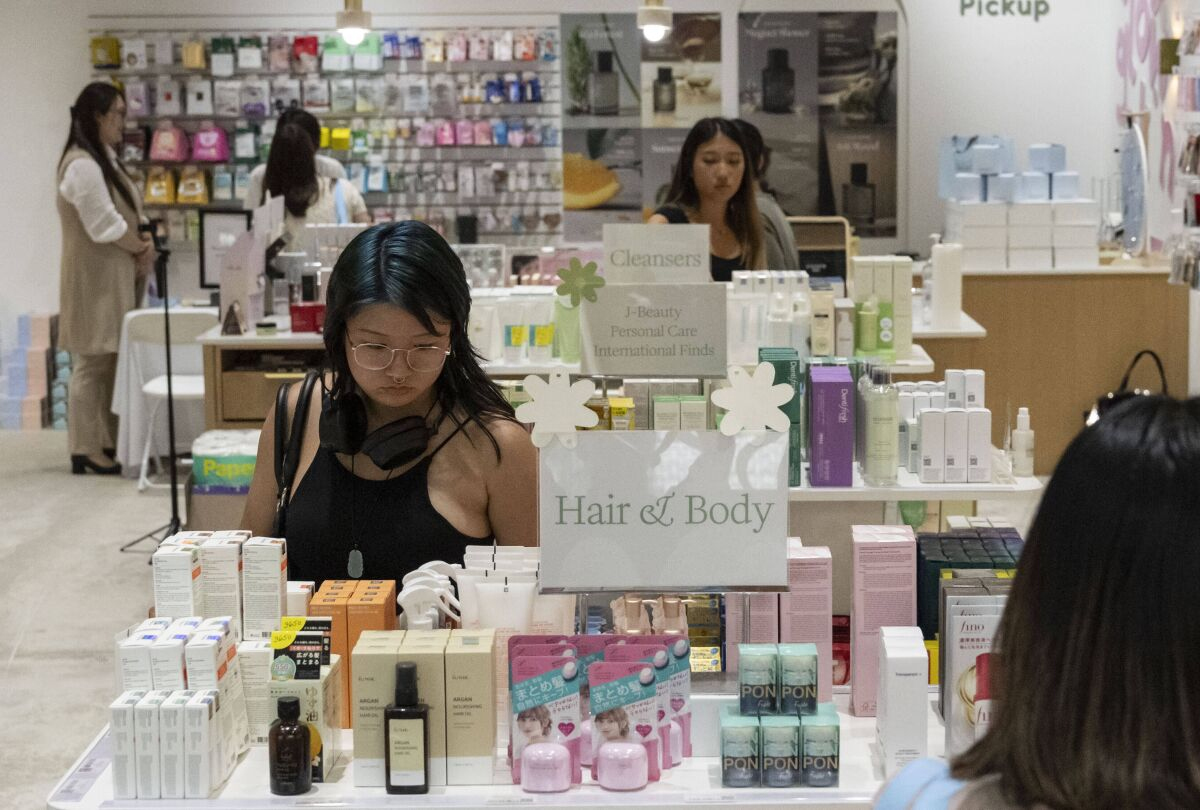
Photo Credit: Getty Images
South Korean beauty products, better known under the global banner of K-beauty, have become a skincare staple in the United States—delivering glowing results and a loyal customer base. But now, with a fresh 15% import tax imposed by former President Donald Trump, the question remains: will Americans still be willing to pay for their glass-skin glow?
For many, the answer is yes. K-beauty is no longer a niche trend but a cultural and cosmetic phenomenon. From heartleaf extract to snail mucin, South Korean skincare brands offer innovative formulas, gentle ingredients, and sleek packaging that's won over millions. Pearl Mak, a 27-year-old graphic designer in the US, says 95% of her skincare routine is K-beauty. Even with tariffs in place, she's not budging. "I'm willing to pay more for the same products," she states.
And she's not alone. In 2024, Americans spent approximately $1.7 billion on K-beauty products—a staggering 50% increase from the year before. Retailers like Santé Brand and Senti Senti reported a sharp uptick in orders following the announcement of tariffs, as savvy consumers rushed to stock up before prices soared.
The new levies might not hit shelves immediately since many current inventories were priced before the tariff took effect, but retailers are already preparing for the financial impact. "Anyone telling you prices will stay flat through the next two years is naive," says Santé Brand's founder, Cheyenne Ware. Smaller sellers on platforms like Amazon, who already operate on razor-thin profit margins, are especially vulnerable.
Economist Munseob Lee agrees that price hikes are inevitable. However, he believes dedicated consumers will stay loyal. "Casual buyers might be turned off, but true fans won't find easy substitutes," he explains.
Larger K-beauty brands are in a better position to absorb the costs due to their wider margins, but smaller South Korean firms may struggle. Despite this, the global allure of K-beauty—bolstered by the popularity of Korean culture through K-pop, K-dramas, and social media—makes it unlikely to fade.
As the beauty trade war unfolds, one thing remains clear: K-beauty's place in American skincare cabinets is secure. Even with rising costs, the obsession with South Korea's beauty secrets shows no signs of slowing down. Not even tariffs can dull that glow.