

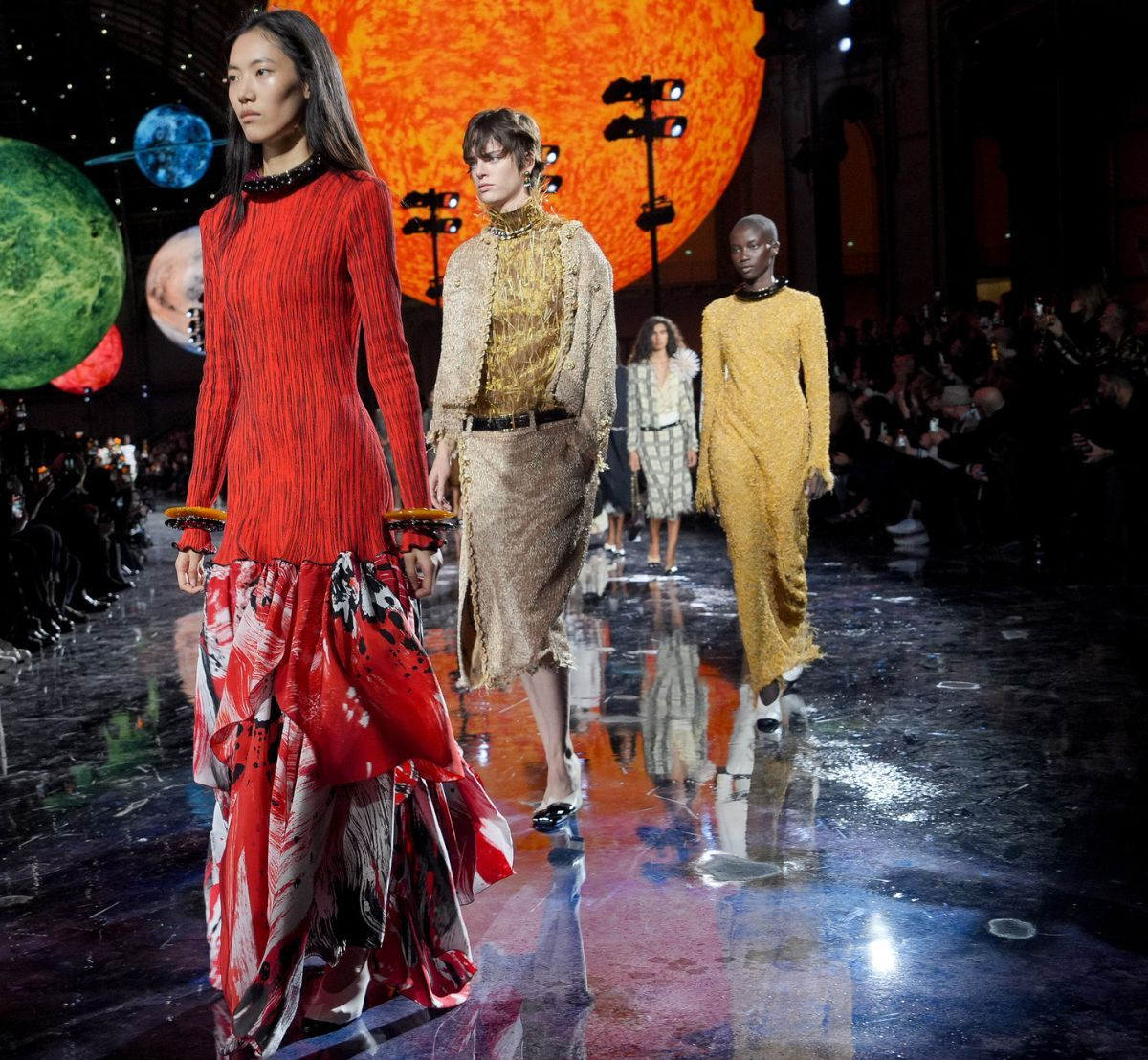
Photo Credit: Getty Images
Paris Fashion Week has once again transformed the French capital into a centre of fashion, celebrity and creative experimentation as major houses unveil their latest collections.
The event, widely regarded as one of the most important stages in the fashion industry, has attracted designers, celebrities and thousands of enthusiastic spectators.
Rihanna was among the high profile personalities spotted at the event, while large crowds gathered outside shows hoping to catch glimpses of their favourite stars.
The opening days placed particular attention on emerging designers and unconventional creative ideas. Shows by Matières Fécales, Swedish designer Ellen Hodakova Larsson and LVMH Prize winner Julie Kegels helped establish an experimental tone.
The atmosphere shifted as major fashion houses took centre stage.
Dior and Saint Laurent delivered high profile productions, while Maison Margiela continued its reputation for challenging traditional ideas of beauty and clothing under designer Glenn Martens.
Martens presented sculpted blazers and shirts with open chest designs alongside unusual footwear and competing floral patterns.
Rick Owens also created a dramatic spectacle with an inclined runway at the Palais de Tokyo. His collection featured striking prismatic tentacle dresses made from tulle and elastic cords that moved dramatically as models walked.
At Comme des Garçons, designer Rei Kawakubo explored the symbolism of royalty through enormous dresses inspired by historic court clothing.
The designs incorporated materials such as cotton and denim while exaggerating traditional shapes associated with gowns, panniers and bustles.
The collection also created an unusual moment on the runway as models wearing large designs struggled to pass one another, forcing them to turn sideways or pause.
At Issey Miyake, designer Satoshi Kondo explored the relationship between clothing and air. The presentation began with an interpretive dance involving enormous pieces of pink fabric before transitioning into lightweight garments designed to interact with the surrounding air.
Balenciaga also presented a significant change in direction under Pierpaolo Piccioli, who has been leading the fashion house for just over a year.
His collection included colourful bags, oversized cummerbunds, capes and air filled floral designs. One notable piece appeared to be an ordinary boxy shirt until its built in hood became visible from another angle.
Other houses explored romance, sensuality and theatrical design.
Schiaparelli presented dramatic evening wear in a jazz club inspired setting, while Tom Ford designer Haider Ackermann continued the label's association with confident and seductive clothing.
Saint Laurent delivered one of the week's most anticipated shows beneath the Eiffel Tower amid speculation that creative director Anthony Vaccarello could be preparing to leave after a decade.
The collection, dominated by gold, reflected the house's historic identity while showcasing Vaccarello's influence.
Paris Fashion Week has therefore become more than a display of upcoming clothing. Through theatrical sets, celebrity appearances and experimental designs, the event continues to serve as a platform where designers debate beauty, identity, tradition and the future of fashion.