

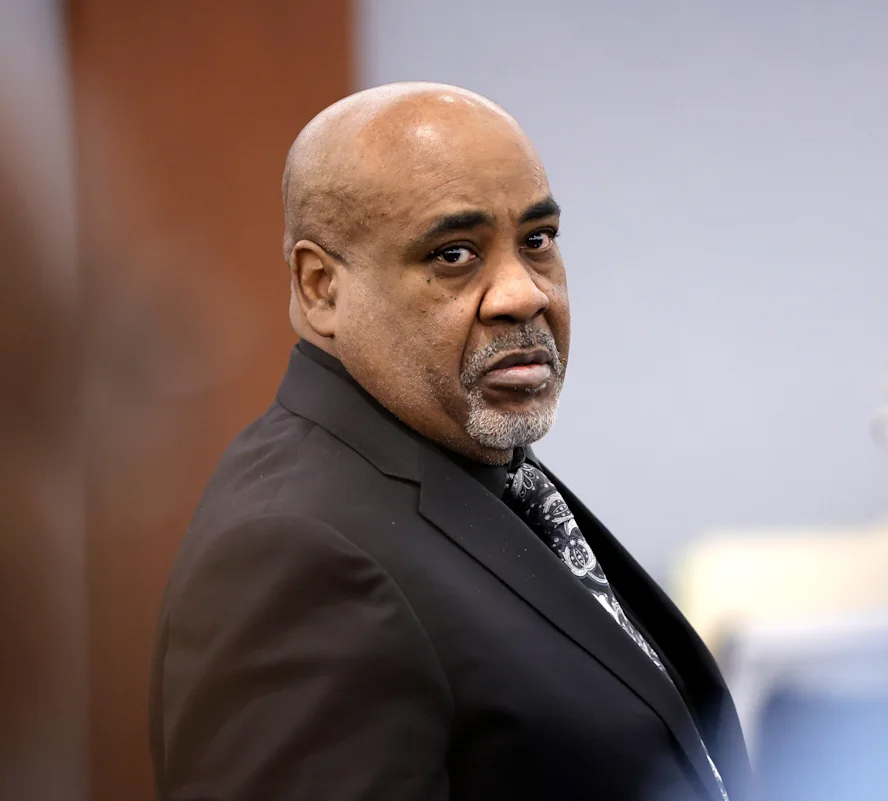
Photo Credit: Getty Images
A jury has found Duane "Keffe D" Davis guilty of orchestrating the 1996 killing of rapper Tupac Shakur in Las Vegas, marking the first conviction in a case that has gripped hip-hop fans for decades.
Davis, 63, was convicted Monday on a charge of murder with a deadly weapon with the intent to promote, further or assist a criminal gang in Shakur's killing, and could be sentenced to life in prison. He had pleaded not guilty. The prosecution said Monday night that the state would dismiss the gang enhancement part of the charge due to witness logistics.
The jury reached its verdict in less than three hours after a weekslong trial.
After the verdict was read, Shakur's sister, Sekyiwa "Set" Shakur, cried and reached back to a person behind her. Also in the courtroom was Davis' son, who covered his face with one hand.
Chief Deputy District Attorney Binu Palal told jurors in closing arguments that Davis acquired a gun and "went hunting" for Shakur and Death Row Records co-founder Marion "Suge" Knight after they beat up Davis' nephew earlier that night.
Palal acknowledged that Davis' accounts of the killing evolved over the years but argued those differences reflected Davis' changing motivations and efforts to protect himself. One critical detail, he said, remained consistent: Davis repeatedly placed himself inside a white Cadillac from which the shots were fired.
"The core facts remain. The material facts remain," Palal said.
Davis' defense attorney, Michael Sanft, challenged jurors to identify evidence outside Davis' own statements that placed him in Las Vegas or inside the Cadillac on the night Shakur was shot. He pointed to the absence of surveillance footage, phone records and other evidence putting Davis there.
"They have nothing in this case that says that man was here in Las Vegas on Sept. 7, 1996," Sanft said, pointing toward Davis.
The panel of 16 jurors, four of whom were alternates, heard testimony from 24 prosecution witnesses and three defense witnesses over nine days.
The trial brought to a head a decades-old case that for years has drawn the eyes of hip-hop fans and true crime experts alike.