

Photo Credit: Getty Images
A powerful magnitude 7.7 earthquake struck off Indonesia's Flores Island on Saturday morning, killing at least 14 people, damaging buildings and sending thousands of residents fleeing to safer locations.
The earthquake struck at approximately 6 a.m. local time, around 68 kilometres northwest of Ende in East Nusa Tenggara province, according to the United States Geological Survey. A series of aftershocks followed the main earthquake, intensifying fears among residents already shaken by the initial tremor.
Indonesia's disaster mitigation agency, BNPB, said at least 14 people had died, although officials warned that the full scale of the destruction and casualties was still being assessed. A tsunami warning issued following the earthquake was later lifted. Indonesia's meteorology agency reported waves reaching up to one metre in Maurole, Ende.
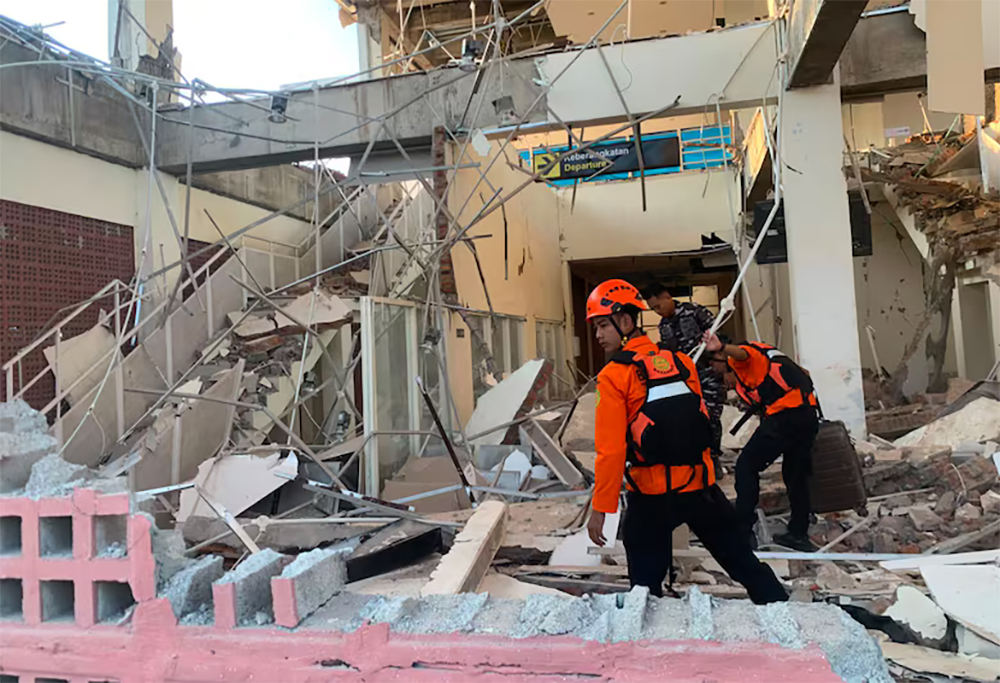
The earthquake was felt across Flores, a mountainous island known for its volcanic landscapes and proximity to Komodo National Park. More than 50 homes were damaged, along with healthcare facilities, schools and government offices, according to BNPB.
Footage circulating on social media showed buildings collapsing as frightened residents ran into the streets. Dust filled the air in several areas, while rescue teams searched damaged structures for survivors.
Residents described the earthquake as unusually violent. Theresia Uta, 52, said she had been having breakfast in Maumere when the shaking began. She ran outside and held onto a tree until the movement stopped before attempting to evacuate by car. Landslides had blocked several roads, complicating movement through the affected areas.
At a seminary in Sikka, students were attending morning Mass when part of an assembly hall collapsed. The rector, Rev. Guidelbertus Tanga, said students and nuns fled in panic, while at least one priest suffered a broken leg after jumping from a second floor.
Approximately 2,000 residents of Nagekeo regency evacuated as a precaution. Authorities deployed emergency response teams and a helicopter, although the island's difficult terrain and scattered communities presented significant challenges for rescue operations.
Indonesia is particularly vulnerable to earthquakes because it lies along the Pacific Ring of Fire, one of the world's most active seismic zones. The country has experienced several devastating earthquakes and tsunamis, including the 2004 Indian Ocean tsunami and major earthquakes in Lombok and Sulawesi.
With rescue efforts continuing, authorities are assessing the damage and searching for survivors while residents remain alert for further aftershocks.