

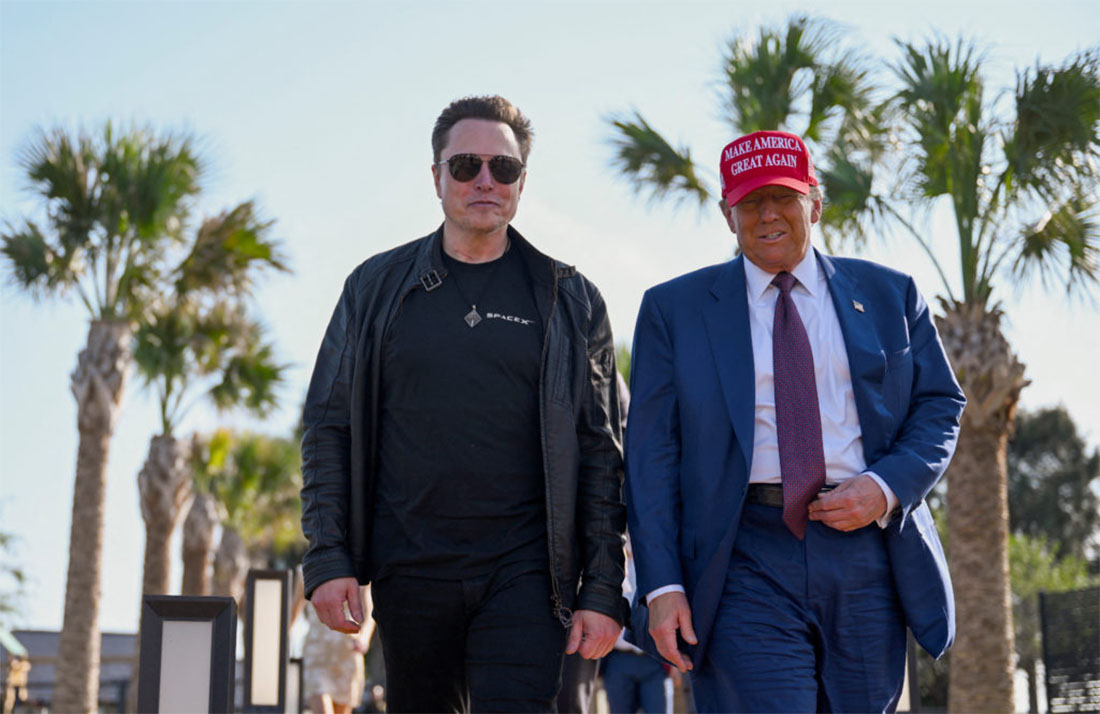
Photo Credit: Getty Images
President Donald Trump is expected to arrive in China this week with a group of leading American business executives, including Apple chief Tim Cook and Tesla and SpaceX boss Elon Musk.
The White House is also expected to include senior figures from finance, technology and manufacturing as part of the official delegation for meetings with Chinese President Xi Jinping, according to reports from US media outlets.
Among those tipped to attend are BlackRock chief executive Larry Fink, Goldman Sachs leader David Solomon, Blackstone executive Stephen Schwarzman and Citigroup head Jane Fraser. Dina Powell McCormick of Meta, Visa chief Ryan McInerney and Boeing chief Kelly Ortberg are also expected to travel with the president.
The visit comes at a sensitive moment for relations between Washington and Beijing, following months of trade tensions, tariff disputes and growing competition over artificial intelligence and advanced chip production.
Trump is expected to use the meetings to push for new commercial agreements and stronger access for American companies operating in China. The administration is also hoping the trip could reinforce a fragile economic truce reached after earlier rounds of retaliatory tariffs between the two countries.
Officials believe the presence of major corporate leaders could help rebuild confidence between the world's two biggest economies after years of political friction. Analysts say executives attending the summit are likely to focus on supply chains, market access and investment rules affecting American firms with extensive operations in China. Technology companies are also expected to raise concerns about export controls, semiconductor restrictions and data regulations that have increasingly complicated cross-border business activity in recent years globally.
China confirmed that Trump will visit from 13 May to 15 May, according to the state news agency Xinhua.
The war involving Iran and Israel is also expected to feature heavily during discussions between the two leaders. Washington is believed to be seeking support from Beijing in encouraging negotiations with Tehran, while China remains concerned about energy markets and the wider effect of instability in the Middle East.