

Photo Credit; Getty Images
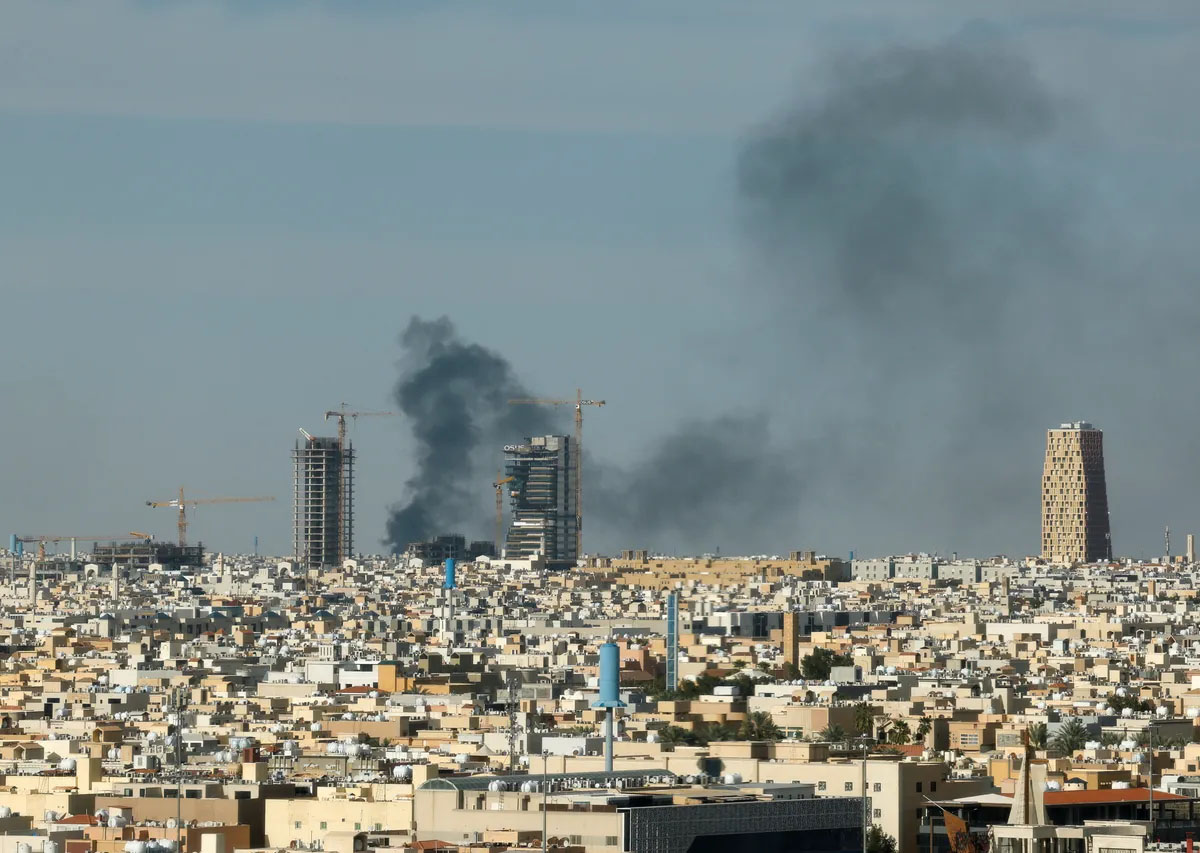
The United States ordered non-essential government personnel to depart Saudi Arabia on Monday as the widening war with Iran rattled global markets and sent oil prices surging past $110 a barrel. Officials warned that escalating missile and drone threats across the Gulf had sharply increased security risks for diplomats and their families.
The departure order from the U.S. embassy in Riyadh marks the first major drawdown of American staff in the kingdom since hostilities between Israel and Iran erupted into open regional conflict. Officials cited the possibility of attacks originating from Yemen or Iran-aligned militias as fighting spreads beyond its original front lines.
Meanwhile, Iran confirmed that Mojtaba Khamenei had been selected as the country's new supreme leader following the death of his father, Ali Khamenei, during recent strikes. The decision places power in the hands of a cleric long believed to maintain close ties with the Revolutionary Guard.
Energy markets reacted almost instantly. Benchmark crude climbed above $110 as disruptions in the Strait of Hormuz raised fears that one of the world's most critical oil corridors could be choked by military confrontation. Several Gulf producers signaled temporary output cuts as tankers slowed or rerouted to avoid the narrow waterway.
U.S. President Donald Trump argued the spike in crude was a tolerable cost if it ultimately weakens Tehran's nuclear ambitions. Posting on Truth Social, he said higher energy prices were "a small price to pay" for neutralizing what he described as Iran's strategic threat.
Analysts say markets are now confronting the possibility that the conflict could spill further into the global energy system. What investors once viewed as a contained confrontation now appears capable of triggering a prolonged supply shock.
Stock markets across Asia opened sharply lower Monday as traders recalibrated expectations for energy costs, shipping security and geopolitical stability. Governments from Beijing to Canberra urged restraint while quietly reviewing contingency plans should the Strait of Hormuz become impassable.
For now, diplomats and energy traders alike are watching the Gulf with growing unease, aware that every missile launch or tanker delay carries consequences far beyond the battlefield. Whether the crisis stabilizes or deepens may determine the trajectory of markets and diplomacy.




